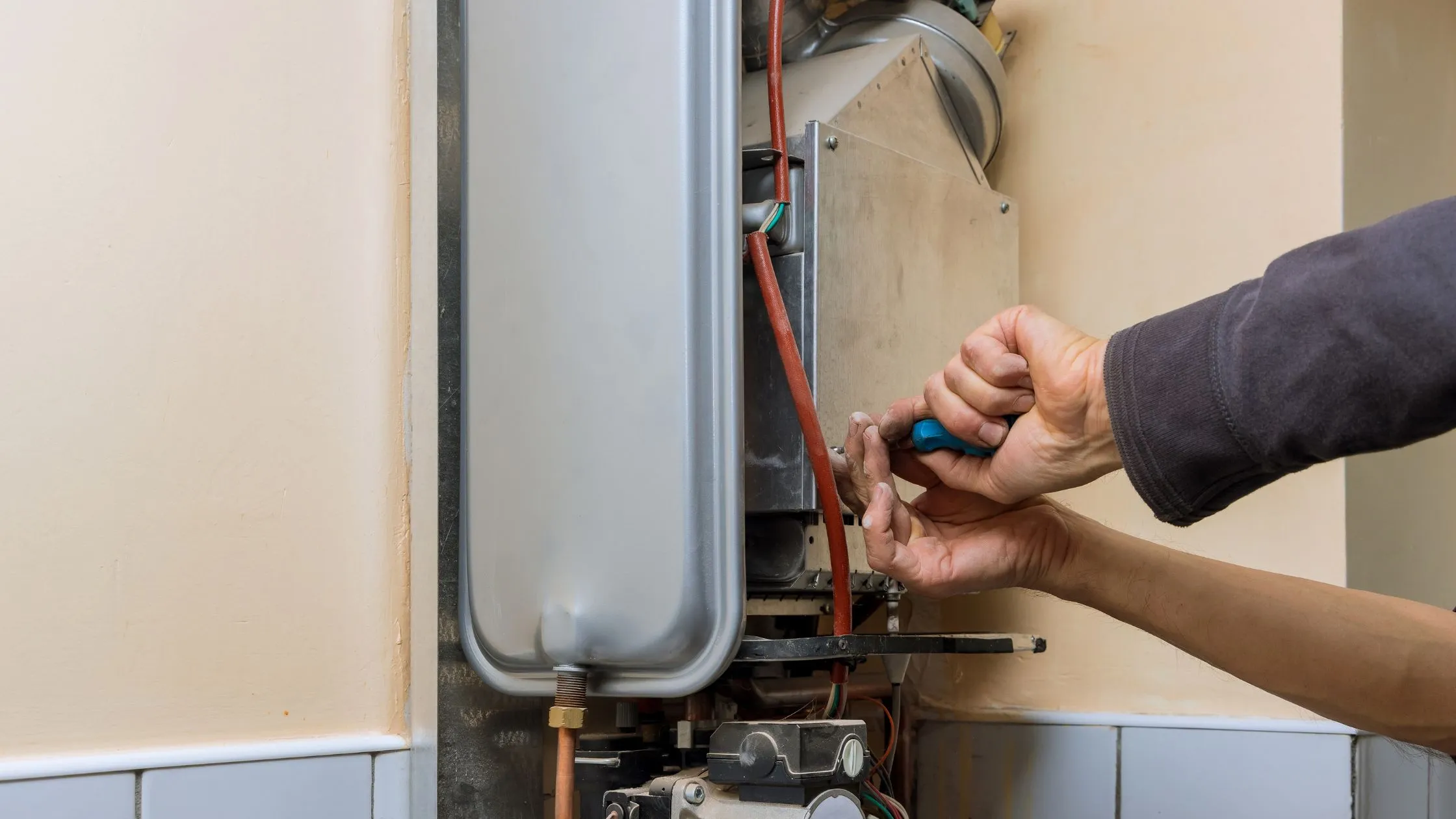


Signs your air conditioner needs maintenance, and the rules

An air conditioner that needs maintenance shows it: it cools less, blows warm air, smells musty, makes a new noise, drips water or pushes up your bill. Start by cleaning the filters and checking the settings. If the problem continues, a technician checks the refrigerant circuit, the condensate drain and the electrics.
AC not cooling, or showing one of these signs? Call +33 1 89 70 15 36 (01 89 70 15 36 from a French phone), 7 days a week, 24 hours a day, or write to us from the contact page. We work in Paris and the inner suburbs (92, 93, 94), for servicing as well as air conditioning installation in Paris.
Planning air conditioning? Installation, servicing and repair, building approval included: see our air conditioning service in Paris.
Why service your air conditioning?
An air conditioner relies on a sealed refrigerant circuit, fans, filters, heat exchangers and sensors. All of these clog or wear over time.
- Performance. A clogged filter, a dusty coil or low refrigerant forces the compressor to work harder for the same result. The unit uses more power and cools less.
- Fewer breakdowns. The failure that happens on the first day of a heatwave is often the result of skipped maintenance: overheating compressor, safety shutdown, blocked fan.
- Air quality. The indoor unit constantly recirculates room air. Without cleaning, the filters and coil become a breeding ground for mould, bacteria and allergens. In a Paris flat where windows stay shut in summer, indoor air quality depends heavily on the state of the unit.
- Lifespan. A serviced unit lasts much longer than a neglected one, and an early replacement costs far more than regular servicing.
7 signs your air conditioner needs maintenance
1. It does not cool as well, or blows warm air
If the room takes longer to cool, the cause is often a clogged filter, a dirty coil or low refrigerant. Do not push the unit by lowering the set temperature: you risk damaging the compressor. Run the checks in the next section first.
2. New or unusual noises
Clicking, grinding, vibration or metallic banging point to a mechanical problem: an unbalanced or dirty fan, a loose screw, a worn bracket, a motor at the end of its life. Ignored, these noises often come before a complete failure.
3. A bad smell
A musty smell means mould or bacteria in the indoor unit (filter, coil, fan, drip tray). A burning smell can mean an electrical overheat: switch the unit off and have it checked straight away.
4. Water dripping from the indoor unit
Air conditioners normally produce water, which should drain outside or into a waste pipe. If it drips into the room, the condensate drain is often blocked or badly sloped, or the condensate pump has failed. Causes and what to do are covered in our article on air conditioning leaking water.
5. Weaker airflow
If the unit blows less hard, the filter is probably clogged or the fan (the cylindrical "barrel" fan in the indoor unit) is dirty. Cooling capacity drops and energy use goes up.
6. Electricity bills rising for no reason
A dirty unit runs longer to get the same result. If your summer bills climb without any change in use, have the unit checked. Settings matter too: our article on air conditioning energy use gives the right temperatures.
7. The unit stops or goes into safety mode
A sudden shutdown can come from a faulty sensor, an overheating compressor or abnormal refrigerant pressure. Do not restart it again and again: you could make the fault worse.
Dirty air conditioner or clogged fan: how to tell
Signs you can see without tools:
- black spots on the air flaps or on the fan, visible if you shine a torch into the air outlet: this is mould;
- a grey film of dust on the filter or on the coil fins behind it;
- a stale smell at start-up that may or may not fade after a few minutes;
- dust or small black particles blown out when the unit starts.
You can clean the filter yourself. The fan, coil and drip tray need the indoor unit to be partly taken apart and suitable products: that is a technician's job, done without bending the fins or wetting the circuit board.
AC not cooling: checks you can do yourself
Before calling a technician, rule out the simple causes.
1. The filters
This is the most common cause of lost performance. Open the front panel of the indoor unit and remove the filters. If they are covered in dust or fluff, vacuum them or rinse them in lukewarm water with a little mild soap, let them dry completely, then put them back.
2. The settings
- Is the mode set to cooling (snowflake), not fan only (propeller) or heating (sun)?
- Does the remote show the right temperature? Weak batteries cause erratic displays.
- Is the set temperature below the room temperature? Set to 28 °C in a room at 27 °C, the unit will not cool.
3. The circuit breaker
If the outdoor unit does not run at all, its dedicated breaker may have tripped. Reset it once. If it trips again, stop there: there is an electrical fault to diagnose.
4. The outdoor unit
- Is the fan turning? If not, the fault is probably electrical or mechanical.
- Is it blocked? Leaves, bags or objects in front of the fins stop it getting rid of heat. Keep at least 30 cm clear around it.
- Does it sound normal? Banging or metallic grinding points to a fan or compressor problem.
Faults that need a technician
Low refrigerant
This is the most common cause of a gradual loss of cooling. Refrigerant carries heat from inside to outside: if there is a leak, even a tiny one, the level drops and so does the cooling. Signs:
- air that is barely cool instead of cold;
- frost on the copper pipes or the indoor coil;
- greasy oil marks on the pipe joints (refrigerant circulates with oil);
- gurgling in the indoor unit;
- performance that declines over days or weeks, not all at once.
Topping up without fixing the leak is like filling a bucket with a hole in it. The technician finds the leak, repairs it, then recharges the circuit to the manufacturer's specified amount.
Faulty temperature sensor
The indoor unit measures room temperature with a sensor. If it is dislodged or faulty, the unit thinks the room is already cool: it starts then stops at once, or never runs the compressor.
Worn start capacitor
A wear part in the outdoor unit. When it weakens, the compressor can no longer start: you hear a repeated click, then nothing.
Failed compressor
The most serious fault: no cooling at all, and you only hear the outdoor fan. On a recent unit the compressor is often covered by the manufacturer's warranty. Beyond that, compare the repair cost with the price of a new unit.
When to call straight away
- filters clean, settings right, breaker on, and the air is still warm;
- frost on the pipes or coil;
- repeated clicking or total silence from the outdoor unit;
- water running into the room;
- a burning or chemical smell.
Noisy air conditioner: where is the noise coming from?
The type of noise points to the cause:
- Whistling or loud blowing at the indoor unit: a clogged filter or dirty fan restricting the airflow. Clean the filters; if the noise remains, the fan needs cleaning by a technician.
- Creaking on start-up and shut-down: normal expansion of the plastic parts, unless it becomes loud or constant.
- Gurgling: water draining badly in the condensate pipe, or normal refrigerant flow when the unit changes mode.
- Vibration or humming at the outdoor unit: a loose bracket, worn anti-vibration mounts, a dirty or unbalanced fan.
- Grinding or a metallic noise: a worn fan bearing or motor. Switch the unit off and have it checked.
In Paris the outdoor unit often sits on a balcony, in a courtyard or on a roof, close to the neighbours: a noise that gets louder soon becomes an issue with the co-owners. Servicing your air conditioning in Paris deals with it before it gets worse.
What a professional service includes
Indoor unit
- cleaning or replacing the filters;
- cleaning and disinfecting the coil (evaporator) and the fan if needed;
- checking the drip tray and drain hose;
- testing the condensate pump, if there is one;
- checking the air flaps, the remote and the wall brackets.
Outdoor unit
- cleaning the condenser (leaves, dust, debris) and straightening fins if needed;
- visual check of the refrigerant lines (insulation, signs of leaks);
- checking wiring and electrical connections;
- measuring operating pressures and air inlet and outlet temperatures.
The service report
The technician gives you a report: work done, condition of the system, faults found and recommendations. Keep it. Your insurer may ask for it after a claim, and the syndic (the building's managing agent) may ask for it in a co-owned building.
Is air conditioning maintenance mandatory in France?
The European F-Gas regulation (Regulation (EU) 2024/573, which replaced Regulation 517/2014) and its transposition into French law govern refrigerants, which are powerful greenhouse gases if they leak.
The leak check
It is mandatory for equipment whose refrigerant charge is at least 5 tonnes of CO2 equivalent (5 tCO2eq). The threshold depends on the refrigerant and the amount: for example, about 2.4 kg of R-410A reaches 5 tCO2eq.
- Most home split systems (mono or multi-split) stay below this threshold and are not subject to the mandatory check.
- Larger installations (multi-zone ducted systems, small commercial systems sometimes fitted in large flats) often exceed it.
For equipment that is covered, the frequency depends on the charge:
- 5 to 50 tCO2eq: every 12 months (24 months with a leak detection system);
- 50 to 500 tCO2eq: every 6 months (12 months with detection);
- over 500 tCO2eq: every 3 months (6 months with detection).
Your installer can tell you whether your unit is covered.
Who can work on the circuit
Only a technician holding the French refrigerant-handling certificate (attestation de capacité) may handle refrigerants. A private individual is not allowed to open the circuit, even to top up the gas.
Even without a legal duty, regular servicing is the norm
Manufacturers recommend an annual professional service to keep performance and the warranty. In an apartment building, the co-ownership rules (règlement de copropriété) may also require periodic servicing of units on the facade or roof.
Tenant or landlord: who is responsible?
Routine upkeep, such as cleaning the filters, is generally the tenant's job. Major repairs remain the landlord's responsibility. If in doubt, check your lease.
How often should you service your air conditioning?
What you do yourself
- Every 2 to 4 weeks during use: clean the indoor unit's filters.
- Every month: check that condensate water drains properly (a trickle should come out outside while the unit cools).
- In spring: run the unit for about thirty minutes before the first hot days. The worst time to discover a fault is the first day of a heatwave.
Professional servicing
- Once a year, ideally in spring, before the hot season.
- Twice a year for a reversible unit also used for heating: in spring and autumn.
What happens when maintenance is skipped
Short term: less cooling, more energy use, smells. Longer term: a damaged compressor, refrigerant leaks, water overflowing into your flat or the one below, complete failure of the outdoor unit. Health-wise, dirty filters and fans spread dust and mould, which can cause irritation, allergies and headaches, especially for children, older people and people with asthma.
How much does air conditioning maintenance cost?
It depends on the number of indoor units, access to the outdoor unit (roof, courtyard, facade) and whether you choose a one-off visit or an annual contract. For our servicing and repair prices, see our rates.
Frequently asked questions
Is air conditioning maintenance mandatory?
The leak check is mandatory above 5 tCO2eq of refrigerant under the F-Gas rules. Most home split systems are below that. An annual professional service is still strongly recommended by manufacturers, and your building's co-ownership rules may require one.
Why is my air conditioner blowing warm air?
In order of likelihood: clogged filters, wrong settings (fan mode instead of cooling, set temperature too high), low refrigerant due to a leak. Less often: a faulty sensor, a worn start capacitor or a failed compressor.
Can I top up the refrigerant myself?
No. Handling refrigerants is restricted to professionals holding the refrigerant-handling certificate. And a top-up without finding the leak is pointless: the gas will escape through the same spot.
How do I clean a dirty air conditioner?
Clean the filters yourself (vacuum or rinse in lukewarm water, dry completely). If you see black spots on the fan or flaps, or a musty smell persists, have the indoor unit cleaned and disinfected by a professional: it has to be partly dismantled.
How often should my air conditioner be serviced?
Once a year by a professional, preferably in spring, and twice a year for a reversible unit used in winter. Between visits, clean the filters every 2 to 4 weeks while the unit is in use.
To limit the heat that enters your home and ease the load on your air conditioner, read our guide to sun protection with shutters, blinds and window films.
Get your air conditioning checked in Paris
An air conditioner that loses efficiency, leaks or gets noisy is sending a clear signal. Acting early avoids a breakdown in the heat, extends the unit's life and keeps the air clean.
Réseau Tubulure services and repairs air conditioning in Paris (75) and the inner suburbs (92, 93, 94), all brands, mono-split, multi-split or ducted. Call +33 1 89 70 15 36, 7 days a week, 24 hours a day, or request a service or a quote. For a new or replacement unit, read our complete guide to air conditioning installation in Paris. Many of our plumbers speak English.