

Is Air Conditioning Really an Energy Drain? The Facts and Figures
Air conditioning is regularly criticised for its energy and environmental impact. But what do the figures actually say? Between preconceptions and verifiable data, this article offers a factual analysis of air conditioning consumption in France and worldwide, comparing it in particular with heating. The goal: to provide an objective, data-driven perspective so everyone can form an informed opinion.
What air conditioning really consumes in France
According to ADEME, total air conditioning consumption in France amounts to 15.5 TWh per year across all sectors (commercial, industrial, residential). The strictly residential share represents 4.9 TWh, or approximately 1% of French household energy consumption.
This figure may come as a surprise given how modest it is. Several reasons explain it:
– The adoption rate among French households remains relatively low: 18% in 2023, rising to 24% in 2025 according to ADEME.
– 75% of residential air conditioning consumption comes from detached houses, not apartments.
– Annual usage duration remains limited to a few weeks in most regions.
On a global scale, the picture is different. According to the International Energy Agency (IEA), air conditioning and fans account for approximately 10% of global electricity consumption. The worldwide stock of air conditioners stands at 1.6 billion units, a figure set to grow significantly in the coming decades.
The comparison with heating: essential context
To properly appreciate the energy impact of air conditioning, it must be compared with heating. In France, heating accounts for approximately two-thirds of a home's energy consumption. It is, by far, the largest energy expenditure for households.
Against this ratio, residential air conditioning and its 1% share appears as a marginal item. This comparison is not intended to minimise the issue, but to place it in context:
– Heating runs 5 to 7 months per year depending on the region, compared to just a few weeks for air conditioning.
– The power demand for heating a home (often 5 to 15 kW) far exceeds that of an air conditioner (2 to 3.5 kW for a wall-mounted split).
– A building's thermal insulation impacts the heating bill far more than the cooling bill.
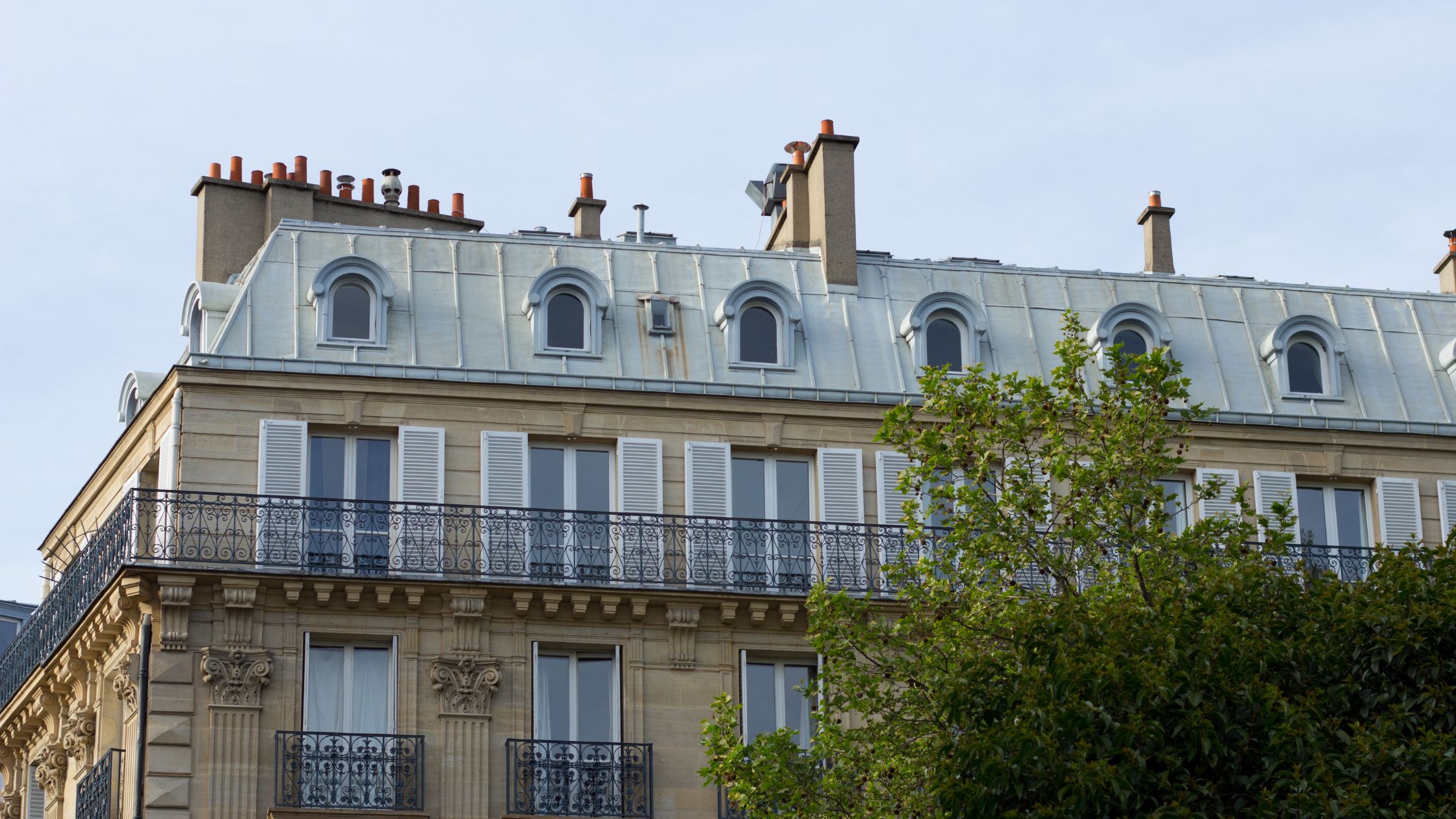
In Parisian apartment buildings, where Haussmannian buildings are often connected to collective gas heating, the heating item weighs even more heavily in the building charges. Adding air conditioning, by comparison, represents a very modest additional energy cost.
The reversible air conditioner: one appliance for two seasons
An often overlooked point: the reversible air conditioner (or air-to-air heat pump) is a two-in-one appliance. In summer, it cools the home by extracting indoor heat. In winter, the cycle reverses and the unit draws heat from the outdoor air to warm the interior.
A higher efficiency than standard electric heating
The coefficient of performance (COP) of an air-to-air heat pump typically ranges between 3 and 4 in heating mode. This means that for every 1 kWh of electricity consumed, the unit delivers 3 to 4 kWh of heat. A standard electric radiator, by comparison, offers a ratio of 1 to 1.
A relevant supplementary solution
In a Parisian apartment, a reversible air conditioner often serves as supplementary heating during the transitional seasons, when the collective heating is not yet running or has just been switched off. It maintains thermal comfort without significant additional consumption.
From "unnecessary luxury" to growing necessity
The perception of air conditioning has changed considerably in recent years, driven by climate change. According to IPCC and Météo-France projections, the frequency of heatwaves could double by 2050 in France.
A public health issue
The heatwaves of 2003, 2019 and 2023 demonstrated the health risks of extreme heat, particularly for the elderly, young children and people with chronic conditions. Tropical nights (nighttime temperatures above 20°C), which prevent physiological recovery, are becoming increasingly frequent in Paris.
A specific urban reality
The urban heat island effect amplifies temperatures in cities: Paris can record 3 to 8°C more than the surrounding countryside during heatwave episodes. In Haussmannian buildings, top floors under zinc roofing and south-west-facing apartments are particularly exposed.
In this context, air conditioning is no longer a superfluous comfort but is becoming, for certain homes and populations, a matter of health and safety.
2050 projections: between sobriety and unchecked growth
ADEME has modelled two contrasting scenarios for residential air conditioning consumption in France by 2050:
– Sobriety scenario: 6 TWh. This scenario assumes measured adoption, high-performance units, moderate temperature setpoints and greater use of passive solutions (insulation, solar shading, natural ventilation).
– Mass adoption without sobriety scenario: 27 TWh. This scenario corresponds to widespread adoption without improvement in practices.
Globally, the IEA projects a tripling of cooling demand by 2050 and an air conditioner stock growing from 1.6 to 5.6 billion units.
Levers for staying within the sober scenario
– Favour high energy-efficiency units (Class A and above).
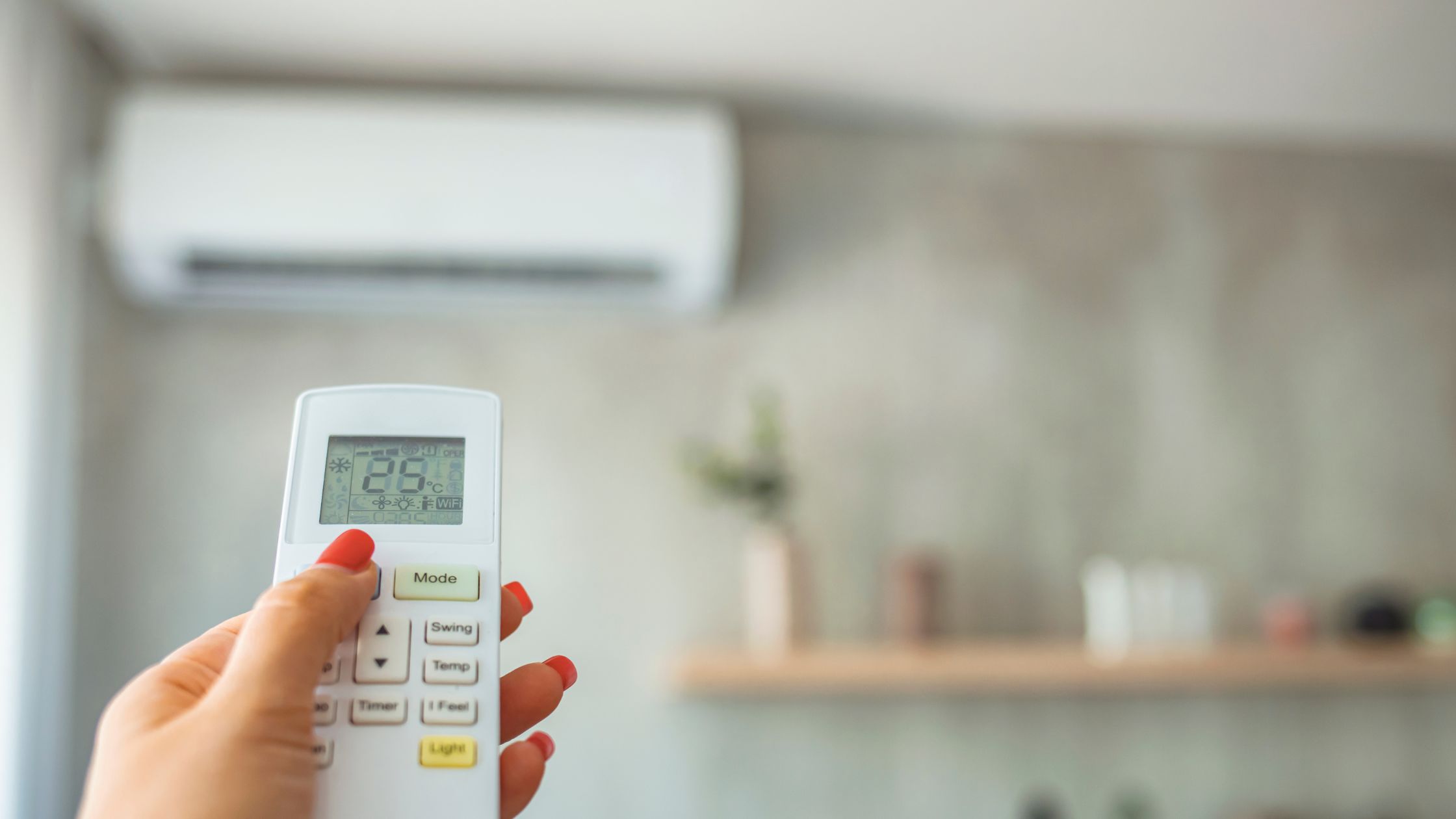
– Set the thermostat to 26°C: according to ADEME, this setting halves consumption compared to a 22°C setpoint.
– Maintain your equipment regularly to preserve its performance.
– Combine air conditioning with passive solutions: shutters, blinds, solar films, nighttime ventilation.
– In apartment buildings, consider collective insulation and solar protection solutions.
As a natural comparison, ADEME notes that a mature tree evaporates approximately 450 litres of water per day, producing a cooling effect equivalent to 5 air conditioners running 20 hours per day. Urban greening is therefore a valuable complement.
Well-managed air conditioning is not an energy drain
The figures are clear: in France, residential air conditioning accounts for approximately 1% of household energy consumption, compared to approximately 67% for heating. The conflation between domestic air conditioning and excessive energy consumption does not withstand factual analysis.
This does not mean vigilance is unnecessary. With climate change and the expected rise in adoption rates, a poorly sized, poorly adjusted or poorly maintained installation can lead to avoidable excess consumption. Conversely, a properly sized unit, set to 26°C, regularly maintained and of the reversible type constitutes an energy-sensible solution.
For Parisian apartment buildings, choosing a qualified RGE-certified installer, capable of complying with protected facade constraints and building regulations, is an essential prerequisite. Réseau Tubulure supports homeowners and apartment buildings in choosing, installing and maintaining air conditioning solutions tailored to every configuration. Do not hesitate to contact us for a personalised quote.
Frequently asked questions
Does air conditioning consume more than heating?
No, and the difference is considerable. Heating accounts for approximately two-thirds of a French home's energy consumption, while residential air conditioning accounts for only about 1% of this consumption according to ADEME. Even with the expected increase in adoption rates, air conditioning will remain a much smaller energy item than heating for many years to come.
Does air conditioning worsen climate change?
Air conditioning consumes electricity and uses refrigerants that, if they leak, are greenhouse gases. However, in France, where electricity is largely decarbonised, the carbon impact of residential air conditioning remains limited. The main challenge lies in choosing high-performance units, using low global warming potential refrigerants and maintaining equipment regularly to prevent leaks.
How can you reduce your air conditioning's impact?
Several practical steps can limit consumption: set the thermostat to 26°C (which halves consumption compared to 22°C according to ADEME), close shutters and curtains during the hottest hours, service the filter and unit every year, and favour a high-efficiency reversible air conditioner. In apartment buildings, collective insulation works can also significantly reduce the need for air conditioning.
---
Sources:
– ADEME: https://www.ademe.fr/presse/communique-national/la-climatisation-vers-une-utilisation-raisonnee-pour-limiter-limpact-sur-lenvironnement/
– ADEME - Batizoom: https://batizoom.ademe.fr/indicateurs/part-des-logements-climatises
– IEA - The Future of Cooling: https://www.iea.org/reports/the-future-of-cooling
Contact Réseau Tubulure
Need a plumber or air conditioning specialist in Paris? Réseau Tubulure responds quickly throughout Paris and Île-de-France.