

Water Heater Repair in Paris: No Hot Water, Faults, Leaks
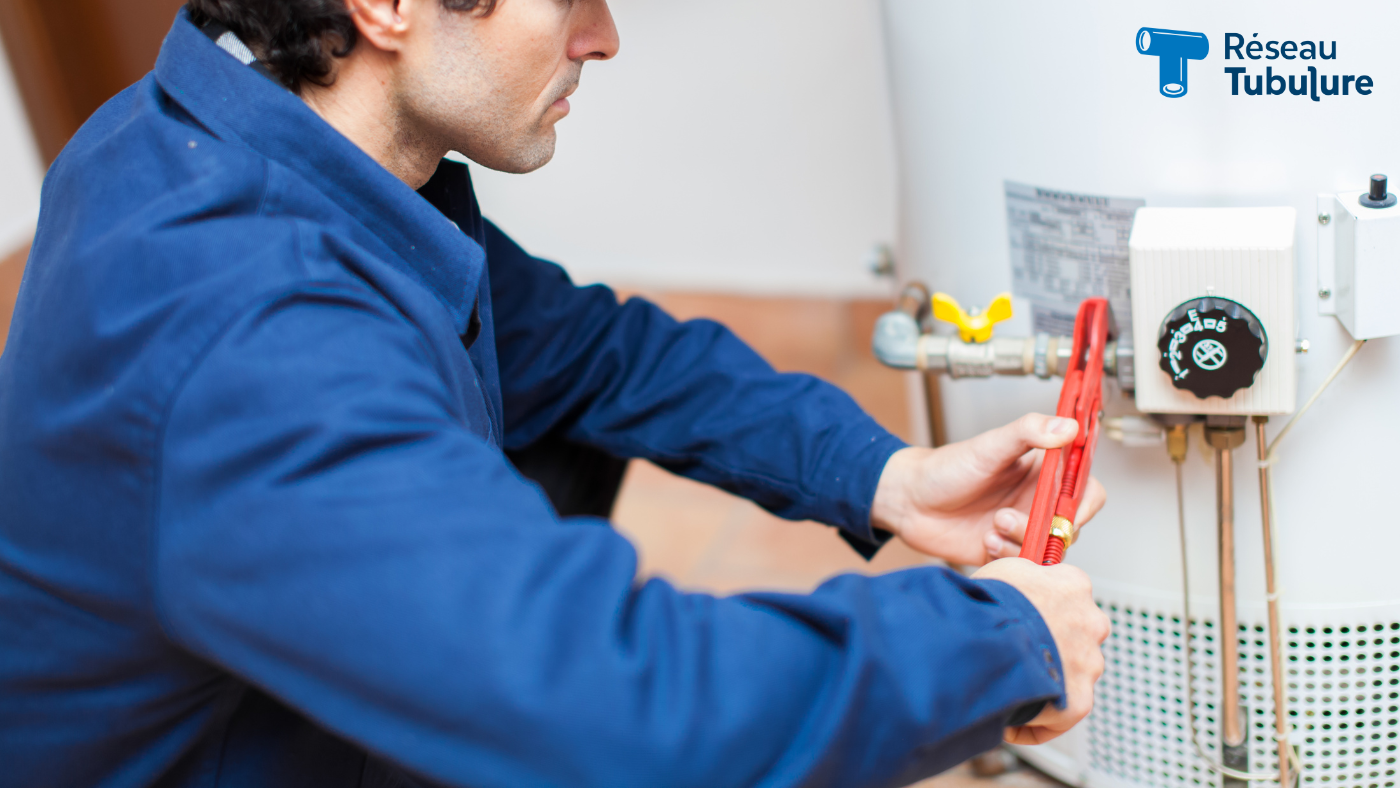
No hot water? First check the water heater's circuit breaker, the off-peak switch and the valves under the tank: some breakdowns stop there. If the breaker trips again, if the tank leaks or smells of burning, switch off the tank's power and water supply and call a plumber.
Water heater broken down or leaking in Paris or the inner suburbs? Call +33 1 89 70 15 36 (01 89 70 15 36 from a French phone), 7 days a week, 24 hours a day, or write to us through the contact page or WhatsApp. Many of our plumbers speak English. Our water heater replacement and repair service repairs or replaces the unit depending on its condition.
Which hot water system do you have?
The diagnosis depends on how your hot water is produced. In a Paris flat it is one of three cases:
- Individual electric water heater (a ballon or cumulus): the most common case. A vertical or horizontal tank in a cupboard, above the toilet, in the bathroom or in a false ceiling. It is the main subject of this article.
- Gas boiler that also heats your water (a wall-hung boiler, often in the kitchen): if hot water is missing, look at the pressure gauge, the flame indicator and any error code, then see our guide to a heating breakdown in Paris.
- Collective hot water (one boiler room for the whole building, common in 1960s and 1970s blocks): ask your neighbours. If they have no hot water either, the fault is in the building: tell the concierge (gardien) and the building manager (syndic).
No hot water: the five-minute checks
Do these checks in order. Do not dismantle anything and do not open the tank's electrical cover.
- The water heater's circuit breaker. In the fuse box it is often labelled "chauffe-eau" or "ECS". If it is down, reset it once. If it trips again straight away, stop there: there is an electrical fault (a shorted element, moisture) that needs a plumber.
- The day/night switch. If you are on an off-peak tariff (heures creuses), a small unit in the fuse box tells the tank to heat at night. It has three positions: 0 (off), AUTO (off-peak) and 1 (forced on). If it is on 0, that is your answer. Switch it to 1 for a few hours: if the tank heats, the switch or its timing is at fault.
- An empty tank. On off-peak heating, a tank emptied by several showers in the evening only refills overnight. It is not a fault. Forced mode will tide you over.
- The valves under the tank. Check that the cold supply and hot outlet valves are open, especially after works or a water cut in the building.
- The tank temperature. Put your hand on the casing. Lukewarm at the bottom, the element is still heating a little. Cold everywhere while the power is fine, the fault is electrical.
After a reset, allow a night of heating before drawing conclusions: an empty tank does not heat up in a few minutes.
The most common faults
The thermostat
The most common fault. No hot water overnight, no noise, no leak. The thermostat no longer switches the element on. Sometimes its thermal cut-out has tripped after overheating or a storm: it is reset by a button under the electrical cover. A reset deals with the symptom, not the cause: if it tripped, have the unit checked.
A scaled or burnt-out heating element
Paris water is hard. Limescale builds up on the element and insulates it from the water: the tank heats more and more slowly, the water turns lukewarm, then the element overheats and burns out. There are two types:
- an immersion element (résistance blindée) sits directly in the water: it scales quickly and replacing it means draining the tank;
- a ceramic element (résistance stéatite) sits in a protective sleeve: it scales less and can be changed without draining the tank.
A water heater that trips the breaker
A breaker that trips every time you switch back on usually means a shorted element or moisture in the electrical part, often from a leak. Do not keep resetting it: risk of fire and electric shock.
If the breaker trips only when the tank starts heating, often at night during off-peak hours, the heating element or the thermostat is usually to blame. If it is the residual current device for a whole row of circuits that trips, it is often an insulation fault: moisture under the cover, a leak at the element's seal or a pierced element. The plumber measures the element's insulation, checks the thermostat and the wiring, then replaces the faulty part. If the tank itself is leaking, the water heater has to be replaced.
A faulty off-peak contactor (jour/nuit switch)
The off-peak contactor (contacteur jour/nuit or heures creuses) is the small unit in the fuse box that lets the tank heat during off-peak hours. When it fails, the tank no longer heats in the AUTO position, yet heats normally in forced mode (position 1). The other case: the contactor sticks on and the tank also heats at peak times, which shows on the bill. Before concluding it has failed, check that your electricity contract really is on off-peak pricing and that the switch has not been set to 0. A faulty contactor is replaced in the fuse box without touching the tank: it is a short job.
Unusual noises
- Cracking or popping while heating: flakes of scale coming off the element. Advanced scaling.
- Whistling: pressure too high, the safety valve or pressure reducer needs checking.
- Bubbling: the scaled element is boiling the water in contact with it. Failure is close.
Rusty or smelly water
Brownish hot water points to tank corrosion or a worn anode (the part that protects the tank). A bad smell calls for draining and a check. A corroded tank can split: see our article on the signs a water heater needs replacing.
Hot water turning lukewarm after a few minutes
The shower starts hot, then cools after a few minutes. Start with a simple test: does the water stay hot at the basin or the kitchen sink?
- Yes, only the shower cools: the culprit is almost certainly the shower's thermostatic mixer, with a scaled or misadjusted cartridge. The water heater is fine.
- No, every tap cools: look at the hot water production.
On an electric tank, the possible causes:
- A tank too small for the household: the most common cause, especially if the problem started when someone moved in. The capacity is on the rating plate.
- Thermostat set too low: the usable hot water reserve shrinks. A setting around 55 to 60°C is generally recommended, which also limits bacterial growth.
- A scaled element: the tank recovers poorly. The problem builds up gradually.
- Off-peak heating only: the night's stock runs out by the evening.
On a gas boiler that heats water on demand, water that cools usually comes from a scaled heat exchanger, a flow rate too high for the appliance (reduce the flow slightly to test) or a faulty sensor.
Leaking water heater: tank, fittings and safety valve
A leaking water heater is handled differently depending on where the water comes from.
A dripping safety valve
The safety valve (groupe de sécurité) is the brass unit on the cold water inlet under the tank. When water heats, it expands: the valve releases this surplus into a small funnel and trap.
- It drips while heating, then stops: normal. It is doing its job.
- It drips all the time, even with the tank cold: the valve seat is scaled or worn, or the incoming pressure is too high. It needs replacing soon: water is wasted and overpressure is no longer controlled.
- Nothing comes out when you lift its lever: it is blocked by scale. It must be replaced.
- Water overflows the funnel: the drain is blocked or badly connected.
Never block the safety valve's drain. Full details are in our article on a dripping water heater safety valve.
A leak at a fitting or from the top of the tank
An old seal or a loose fitting on the cold or hot pipe leaves a puddle under the tank or marks along the pipes. On a wall-hung tank, water running "from the top" often comes from the hot water fittings or a flexible hose. This can usually be repaired without changing the unit.
A leak from the tank itself
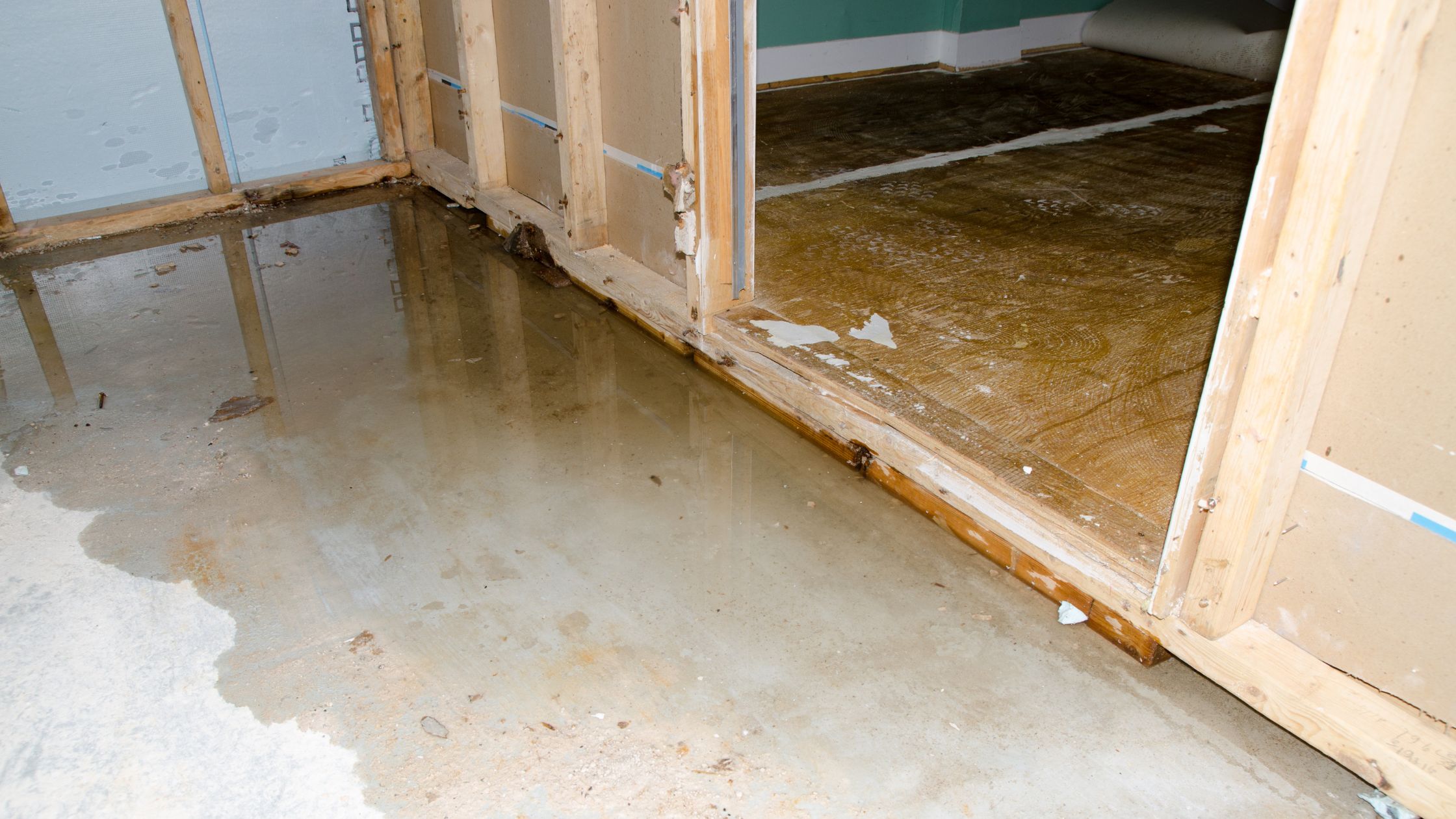
If water seeps from the casing, the bottom cover or rust spots on the tank, the tank has been holed by corrosion. A holed tank cannot be repaired: the water heater must be replaced. Do not wait, a small leak in a pressurised tank can suddenly widen.
What to do straight away
- Switch off the tank's breaker.
- Close the cold water inlet valve of the tank. If the leak continues, close the flat's main stop valve.
- Mop up and put containers under the leak.
- Warn the neighbour below: in a Paris building with old floors, water travels down fast.
- Take photos for your insurer, then call a plumber.
If the water has reached other flats, our guide water leak: when to call a plumber urgently explains what to do with neighbours and the joint damage report (constat amiable).
When to call an emergency plumber, and what can wait
Call straight away if:
- the breaker trips every time you switch back on;
- you smell burning or see blackened wires: switch the power off first;
- the tank is leaking freely or water is reaching the neighbour;
- the hot water suddenly turns rusty;
- you smell gas near a boiler or gas water heater: leave the flat and call the gas emergency number.
A booked visit is enough if:
- you have no hot water but no leak and no electrical fault;
- the safety valve drips constantly but there is no puddle;
- the tank has recently become noisy or the water cools faster than before.
Meanwhile, heat water on the hob for a quick wash and take a shower before the visit if there is lukewarm water left: the tank's water and power will be off during the repair.
What the plumber does on site
- Diagnosis: checks the fuse box and the off-peak switch, tests the thermostat and element with a multimeter, inspects the safety valve, fittings and tank.
- Making safe if needed: isolation, partial draining, floor protection.
- Explanation and price before any repair: what has failed, what can be repaired, and whether replacing makes more sense.
- Repair: new thermostat, new element with descaling, new safety valve, seal or fitting. Common parts are often available straight away; a specific element may need ordering.
- Back in service and checks: refilling, bleeding air, leak check and temperature setting.
If the unit is at the end of its life, our article on the signs a water heater needs replacing helps you choose between repair and replacement, and our electric water heater installation guide explains how a new unit is fitted.
Tenant, landlord, building: who to call?
- You rent: tell your landlord or letting agency as soon as the fault appears, in writing. Routine upkeep is generally the tenant's job and replacing a worn-out unit the landlord's. Your lease and your landlord are the reference.
- Collective hot water: the fault belongs to the co-ownership (copropriété). Tell the concierge and the building manager.
- A leak affecting neighbours: tell them and your insurer, and keep the photos and the repair invoice.
How much does a water heater repair cost?
The price depends on the fault, the part to replace and access to the tank (narrow cupboard, false ceiling, a floor with no lift). You know the price before the repair. For amounts, see our prices.
Avoiding the next breakdown
- Lift the safety valve lever regularly (once a month is the usual recommendation) so it does not seize.
- Have the tank descaled at a rate suited to your water hardness: in Paris, it is the best way to protect the element.
- Have the anode checked during descaling.
- Keep the thermostat around 55 to 60°C: higher settings speed up scaling.
Frequently asked questions
Why is there no hot water when the breaker is on?
The most likely causes are an off-peak switch left on 0, a failed or tripped thermostat, or a burnt-out element. Put the switch on forced mode for a few hours. If the tank stays cold, call a plumber.
My water heater drips from the pipe underneath: is it serious?
If it only drips while heating, it is normal: the safety valve is releasing expansion water. If it runs all the time, the safety valve needs replacing.
The tank leaks from the bottom: can it be repaired?
If the water comes from the safety valve or a fitting, yes. If it comes out of the tank itself (casing, bottom cover, rust), the tank is holed and the water heater must be replaced.
Why is the water hot at the basin and lukewarm in the shower?
It is almost always the shower's thermostatic mixer, scaled or misadjusted. Your hot water production is working.
Can you come on a Sunday or at night?
Yes, we work 7 days a week, 24 hours a day. For a fault with no leak and no danger, a booked weekday visit is often enough.
Get your water heater repaired
Réseau Tubulure works in Paris and the inner suburbs (92, 93, 94), 7 days a week, 24 hours a day, on water heater faults, leaks and replacements. Many of our plumbers speak English.
- Phone: +33 1 89 70 15 36 (01 89 70 15 36 from a French phone)
- Form: contact us
- WhatsApp: from the button on the site