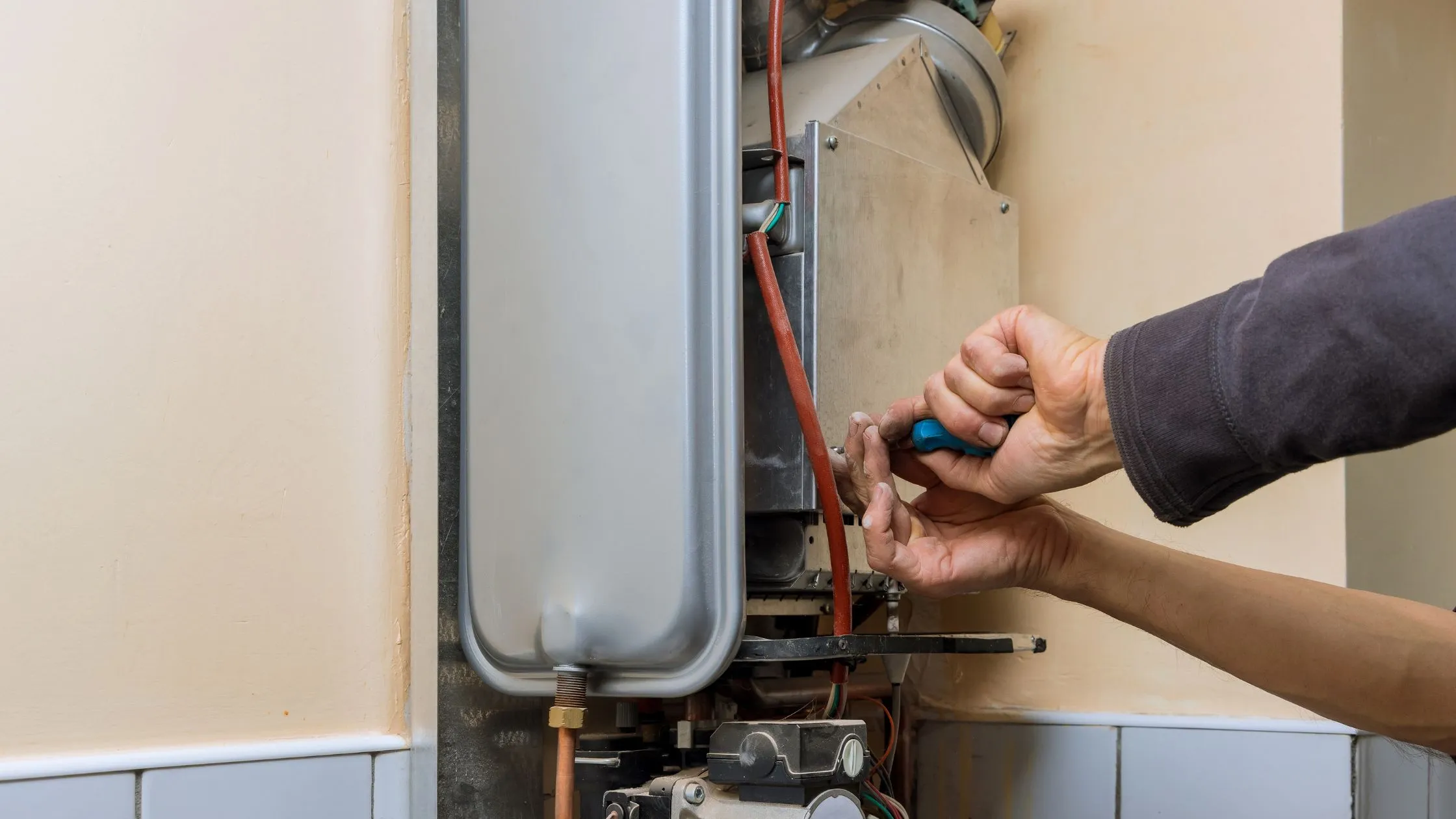


Electric Water Heater Installation in Paris: Complete Guide
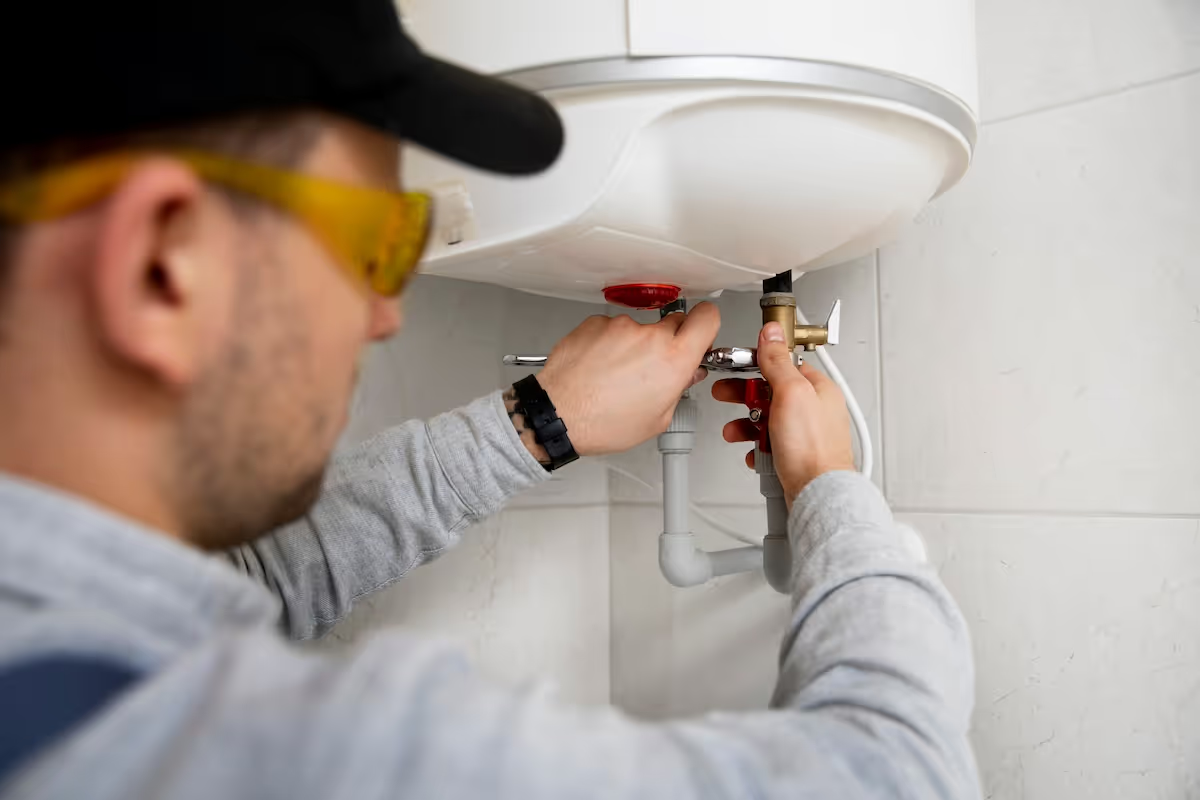
Installing an electric water heater means choosing the right type and capacity, checking the location and the electrical circuit, then fitting the unit with a new safety valve and a connected drain. In a Paris flat, access, weight and the fuse box often decide the model.
A water heater to install or replace in Paris or the inner suburbs? Call +33 1 89 70 15 36 (01 89 70 15 36 from a French phone), 7 days a week, 24 hours a day, or write to us through the contact page or WhatsApp. Many of our plumbers speak English. Our water heater replacement service handles the choice, the removal of the old unit and the fitting.
This guide is for owners and tenants preparing a replacement. It ends with the settings and habits that lower the hot water bill, because day-to-day consumption weighs far more than the purchase.
Types of electric water heater
The storage water heater (ballon, cumulus)
The most common solution in Paris flats. Water is heated and stored in an insulated tank. Depending on the space available:
- vertical wall-hung: the most common format, above the toilet or in a cupboard;
- vertical floor-standing: for large capacities, when the wall cannot carry the unit;
- horizontal: for a false ceiling or the top of a cupboard;
- flat or compact: shallower, for narrow recesses, at the cost of less capacity for the same footprint.
Immersion or ceramic element?
This is the most important choice in a hard-water city like Paris.
- Immersion element (résistance blindée): in direct contact with the water, cheaper to buy, but it scales quickly and replacing it means draining the tank.
- Ceramic element (résistance stéatite): protected in a sleeve, it scales less, heats more evenly and can be changed without draining the tank.
In Paris, the ceramic element is generally the better long-term choice. Some models with an electronic anode (impressed current, ACI) also protect the tank better against corrosion.
The instantaneous electric water heater
It heats water as it flows, with no storage. It suits an isolated tap (a cloakroom basin, a kitchenette) but needs a lot of electrical power at the moment of use. In an older flat where the electricity contract and fuse box are often tight, it is rarely suitable as the main solution.
The heat pump water heater
It uses a heat pump to heat water and uses much less electricity than a standard tank. In return, it needs space, a ventilated room or ducts to the outside, and it makes some noise. In a small Paris flat it is often difficult; in a suburban house with a garage or utility room, it is worth studying. Aid may be available provided the installer is RGE for that work: see our article on plumber certifications in France.
Choosing the right capacity
A tank that is too small leaves you without hot water in the evening. A tank that is too large heats and keeps warm water you never use. The usual pointers:
- 1 person: 50 to 75 litres
- 2 people: around 100 litres
- 3 to 4 people: 150 to 200 litres
- 5 people or more: 200 litres and above
Adjust for your habits: long showers, baths, several showers in a row in the morning. Think about the heating mode too: a tank that only heats on off-peak hours must last the whole day. If the water turns lukewarm too quickly with your current tank, our guide to water heater repair helps you tell a capacity problem from a fault.
Preparing the installation
The location
- Support: a full tank weighs the unit plus one kilo per litre of water. A plaster block wall or a light partition cannot always carry it: a tripod, a base or reinforcement is then needed.
- Access: the safety valve, thermostat and valves must stay accessible for maintenance.
- Drain: the safety valve must be connected to a drain through a trap. Plan for a waste pipe nearby.
- Distance to taps: the further the tank is from the shower and kitchen, the more water you run before it arrives hot.
- Bathroom: the NF C 15-100 electrical standard defines zones around the bath and shower where the unit cannot be placed just anywhere.
Electrics
Under the NF C 15-100 standard, a storage water heater needs:
- a dedicated circuit, protected by a breaker suited to the unit's power;
- a cable of sufficient cross-section;
- an earth connection;
- a day/night switch if you are on an off-peak tariff (heures creuses).
In an older building, the fuse box does not always meet these conditions. The circuit may need upgrading: this must appear in the quote, before work starts.
The building
The co-ownership rules (règlement de copropriété) may set hours for works, and carrying a large tank up a narrow staircase takes planning. In a building with no lift, mention the floor when asking for the quote. If the water has to be shut off on the riser to isolate your flat, the concierge (gardien) or building manager (syndic) must be told.
The steps of a professional installation
- Visit or photos: the plumber checks the location, the support, water pressure, the fuse box and the drain. Photos of the existing setup are often enough for a first quote.
- Removing the old unit: power and water off, draining, disconnection, carrying down and disposal of the old tank.
- Fixing: anchors or supports suited to the wall, or mounting on a tripod or base.
- Plumbing connections: a new safety valve on the cold inlet, dielectric fittings between copper pipes and the tank, the hot water outlet, the valve's drain through a trap. A pressure reducer is added if the building's pressure is too high.
- Electrical connection: a dedicated circuit to the NF C 15-100 standard, connection of the off-peak switch if needed.
- Commissioning: filling with a hot tap open to bleed the air, leak check, switching on only once the tank is full, temperature setting.
Never switch a water heater on when it is empty: the element would burn out. A like-for-like replacement takes a few hours; an installation with electrical upgrades or a new location takes longer.
How much does a water heater installation cost?
The price depends on the capacity, the element type, the configuration (like-for-like or relocation), access and any electrical work. A serious quote itemises the unit (brand, model, capacity), labour, parts (safety valve, fittings), removal of the old unit and any extra work. For amounts, see our prices.
After installation: the right settings
- Temperature: a setting around 55 to 60°C is generally recommended. Lower, standing water favours bacteria; higher, scale builds up faster, consumption rises and so does the risk of scalding at the tap.
- Safety valve: lift its lever regularly, once a month as usually recommended, so it does not seize. Dripping while heating is normal; see our article on a dripping safety valve.
- Descaling: needed regularly in Paris, at a rate that depends on water hardness and element type, with an anode check.
Lowering your hot water bill: 12 effective habits
Free settings
- Set the thermostat between 55 and 60°C, no higher. Do not go lower to save money: the health risk is not worth it.
- Heat on off-peak hours if your contract includes them: the day/night switch starts heating at night, at the lower rate.
- Switch the tank off at the breaker during a long absence, and back on the day before you return so it has time to heat.
- Do not switch it off every night: reheating in the morning costs more than scheduled off-peak heating.
Everyday habits
- Choose short showers over baths, and turn the water off while soaping.
- Wash clothes at 30 or 40°C when possible, and check that the washing machine and dishwasher are connected to cold water: they heat the water they need themselves.
- Use the dishwasher's eco programme rather than washing up under a running hot tap.
Small equipment
- Fit aerators on taps and a water-saving shower head: they reduce the flow by mixing air into the water, without feeling weaker. Clean them now and then, as scale blocks them.
- Insulate hot water pipes that cross an unheated space with foam sleeves: hot water reaches the tap faster.
- Insulate the tank if it sits in a cold room (cellar, garage) with a jacket, leaving the safety valve and electrical cover clear.
Maintenance and leaks
- Have any dripping hot tap repaired: you pay for the water and the energy to heat it. A scaled tank also uses more: descaling protects both the element and your bill.
- When replacing, choose the right capacity and, if your home allows, consider a more efficient model such as a heat pump water heater.
If your bill stays unusually high despite these habits, a plumber can look for a leak on the hot water circuit, a faulty element or a safety valve that runs all the time.
Water heater maintenance: what to do, and who does it
An electric water heater needs little maintenance, but a few habits extend its life, especially with hard Paris water:
- Operate the safety valve regularly, as the manufacturer's manual advises: a few seconds is enough to flush out scale and check it is not stuck.
- Have the magnesium anode checked during a service visit: it protects the tank from corrosion and wears away over time. Models with a powered anode (ACI) do not need this.
- Have the tank descaled when scale builds up: noises while heating, water that heats less well, a safety valve that runs constantly.
- Keep an eye on the base of the tank: any sign of damp should be checked.
Water heater maintenance: tenant or landlord?
As a general rule, routine upkeep (operating the safety valve, descaling) is the tenant's job, while replacing a worn or faulty appliance is the landlord's. Your lease may set out the split. If in doubt, tell your landlord in writing before calling a plumber.
Frequently asked questions
Can I install my water heater myself?
We advise against it. The job involves both pressurised water and electricity, under the NF C 15-100 rules. A mistake on the safety valve or the electrical connection can cause a leak or a hazard. After water damage, your insurer may also ask for a professional's invoice.
How long does installation take?
A few hours for a like-for-like replacement. Longer if the location changes, if the electrical circuit needs upgrading or if access is difficult.
What temperature should a new water heater be set to?
Between 55 and 60°C. It is the best balance between hygiene, comfort, consumption and the unit's lifespan.
Is a ceramic element worth the extra cost in Paris?
Generally yes: with hard Paris water, the protected element scales less, fails less often and can be replaced without draining.
Is a heat pump water heater possible in a flat?
Sometimes. It needs space, a ventilated room or ducts to the outside, and you must accept some noise. A plumber checks feasibility on site.
Get your water heater installed
Réseau Tubulure works in Paris and the inner suburbs (92, 93, 94), 7 days a week, 24 hours a day, on water heater repairs, replacements and installations. Many of our plumbers speak English.
- Phone: +33 1 89 70 15 36 (01 89 70 15 36 from a French phone)
- Form: contact us
- WhatsApp: from the button on the site
Still unsure whether to repair or replace? Read the signs a water heater needs replacing, then see our water heater replacement service.