

Water Heater Safety Valve Dripping: Normal or a Warning Sign?
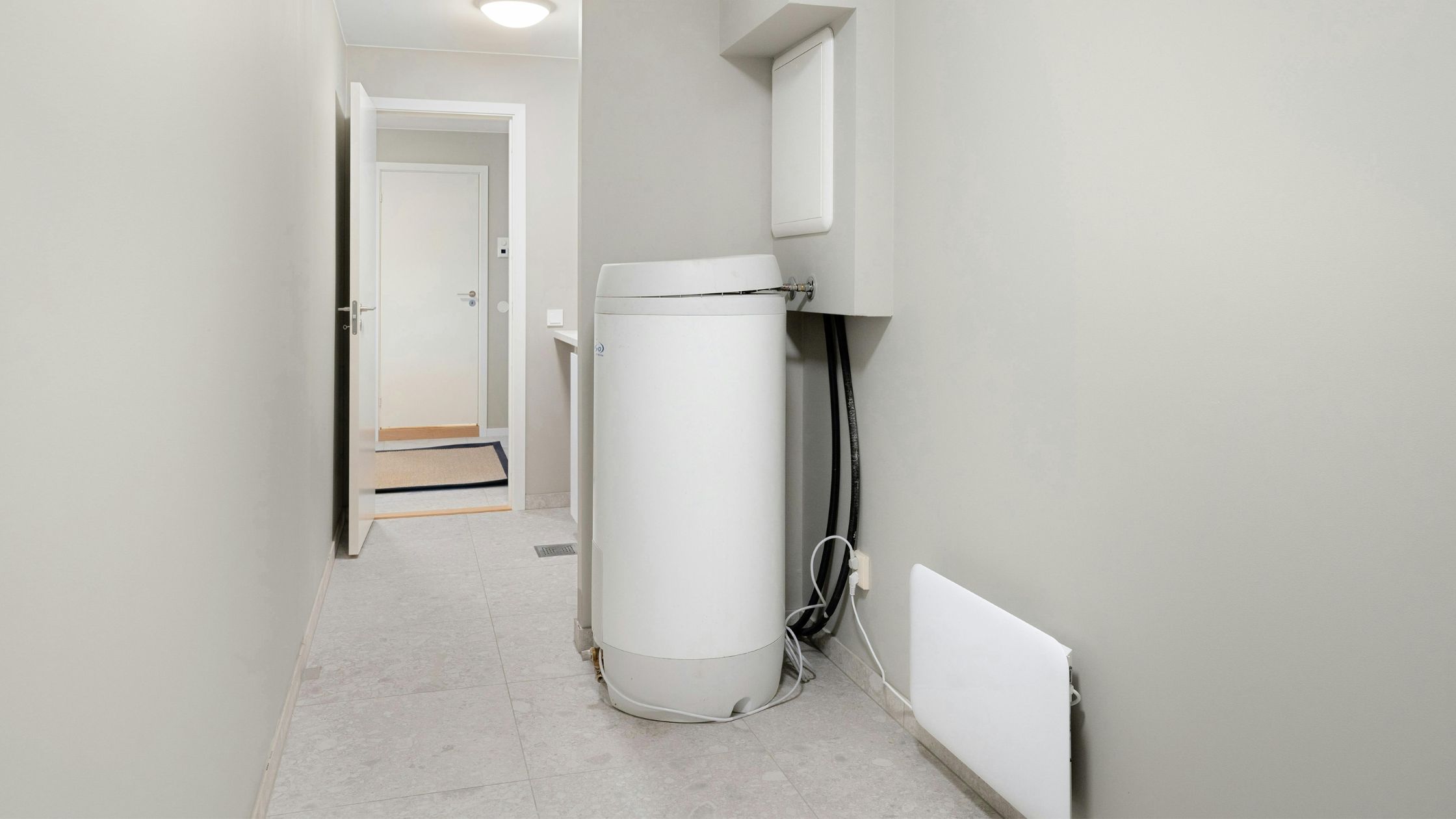
You notice a trickle of water under your water heater, at the small reddish brass component fitted on the cold water inlet. Should you be worried, or is this normal? The answer depends entirely on the rhythm of that flow, and the distinction is worth understanding, because it separates perfectly healthy operation from a fault that wastes water continuously.
This guide explains the role of the safety valve, when its discharge is normal, when it becomes abnormal, and above all what you must never do to try to stop it.
What the safety valve is for
The safety valve group is a mandatory device fitted on the cold water inlet of every storage water heater. It performs three functions: it isolates the tank from the network, it allows the tank to be drained, and above all it releases the excess pressure that builds during heating.
This last point is essential to understand. When water heats, it expands. In a closed tank, this expansion raises the pressure. With no outlet, that pressure would eventually damage the cylinder. The safety valve automatically releases this surplus, in the form of a discharge through its outlet.
In other words, a safety valve that lets water through during heating is not malfunctioning: it is doing exactly its job, and that is precisely what protects your installation.
When the discharge is normal
A discharge is considered normal when it occurs only during heating phases, generally at night if your tank runs on off-peak electricity, and then stops completely.
The volume involved remains modest, in the order of a few percent of the tank's capacity per cycle. A 200-litre tank may therefore discharge a few litres per heating cycle without indicating any fault at all.
The decisive criterion is therefore intermittence: water during heating, nothing at all between cycles.
When the discharge becomes abnormal
Several situations should, by contrast, alert you.
A permanent discharge, continuing even when the tank is not heating and nobody is drawing hot water, signals a genuine fault.
A flow that increases noticeably from one month to the next indicates progressive deterioration of the mechanism.
A discharge accompanied by heavy whitish limescale deposits or rust on the valve body reflects advanced scaling or corrosion.
A leak coming not from the discharge outlet but from the body of the valve itself, or from its connection to the tank, is always abnormal.
Finally, an unexplained rise in your water bill, when your usage has not changed, may betray a permanent discharge that has gone unnoticed. Our article on a rising water bill and hidden leaks details this check.
The causes of a permanent discharge
Three causes recur most often. Scaling of the mechanism is the first: Parisian water being hard, deposits eventually prevent the valve from closing fully, letting a continuous trickle through.
Excessive network pressure is the second cause. If pressure exceeds the valve's trigger threshold, it opens permanently to regulate it. In this case the problem is not the valve but the absence or misadjustment of a pressure reducer upstream.
Natural wear of the mechanism is the third cause. A safety valve has a limited service life, generally around five to seven years, after which preventive replacement is recommended.
What you must never do
Faced with a discharge felt to be a nuisance, there is a temptation to block the outlet or close the valve. This is a dangerous mistake that must be ruled out categorically.
Blocking the outlet removes the tank's only pressure relief. Pressure then rises with no escape during every heating cycle, exposing the cylinder to deformation, a weld failure, even a rupture. The risk is not theoretical.
Likewise, never replace a safety valve with a plain fitting, and do not dismantle the mechanism without first switching off the tank's electrical supply and closing the water inlet. A tank left powered and empty destroys its heating element within minutes.
The maintenance habit worth knowing
One simple habit noticeably extends the valve's life: operating its lever once or twice a year. This manoeuvre briefly opens the valve fully and flushes out the limescale deposits accumulating on the seat.
Expect a strong discharge for a few seconds, which is normal. If after this the valve no longer closes properly and keeps running, the mechanism is too scaled to recover and replacement is required.
When to call a professional
Replacing a safety valve remains a quick, moderately priced job, bearing no comparison with the damage from a failed tank or a permanent discharge inflating the bill for months.
Call someone in if the discharge is permanent, if the valve shows corrosion, if the leak comes from the body of the unit, or if the annual manoeuvre does not restore proper closure. A professional will generally take the opportunity to check network pressure, since a valve wearing out prematurely often reveals a reducer problem upstream.
If your tank is also approaching twelve years old, this visit is a good opportunity to assess its overall condition rather than treating only the visible symptom.
Frequently asked questions
My safety valve only runs at night, is that serious?
No, that is normal operation if your tank heats on off-peak electricity. Water expansion during heating is released through the valve. As long as the discharge stops outside heating phases, all is well.
Can I replace the safety valve myself?
The job involves switching off the power, closing the water inlet, partially draining the tank and achieving a perfect seal on the new connection. A mistake risks water damage or destruction of the heating element. A professional visit remains safer.
How much water is lost with a permanent discharge?
A continuous trickle, however fine, adds up to a significant volume over a full year since it runs without interruption day and night. It is precisely this continuity that makes the waste significant despite its harmless appearance.
Is a trap needed under the safety valve?
Yes, the valve outlet must be connected to a trap linked to the waste system, so the discharged water drains away cleanly without pooling or running onto the floor. A missing or badly connected outlet is an installation defect to correct.
In summary
A safety valve that drips during heating is performing its function and protecting your tank. A permanent discharge, by contrast, signals scaling, excessive pressure or mechanical wear, and wastes water continuously. In every case, never block the outlet: the appliance's safety depends on it. An annual operation of the lever is enough to prevent most blockages.
Reseau Tubulure replaces and checks water heater safety valves in Paris and the inner suburbs, including network pressure verification. Contact us if the discharge no longer stops.
Contact Réseau Tubulure
Need a plumber or air conditioning specialist in Paris? Réseau Tubulure responds quickly throughout Paris and Île-de-France.