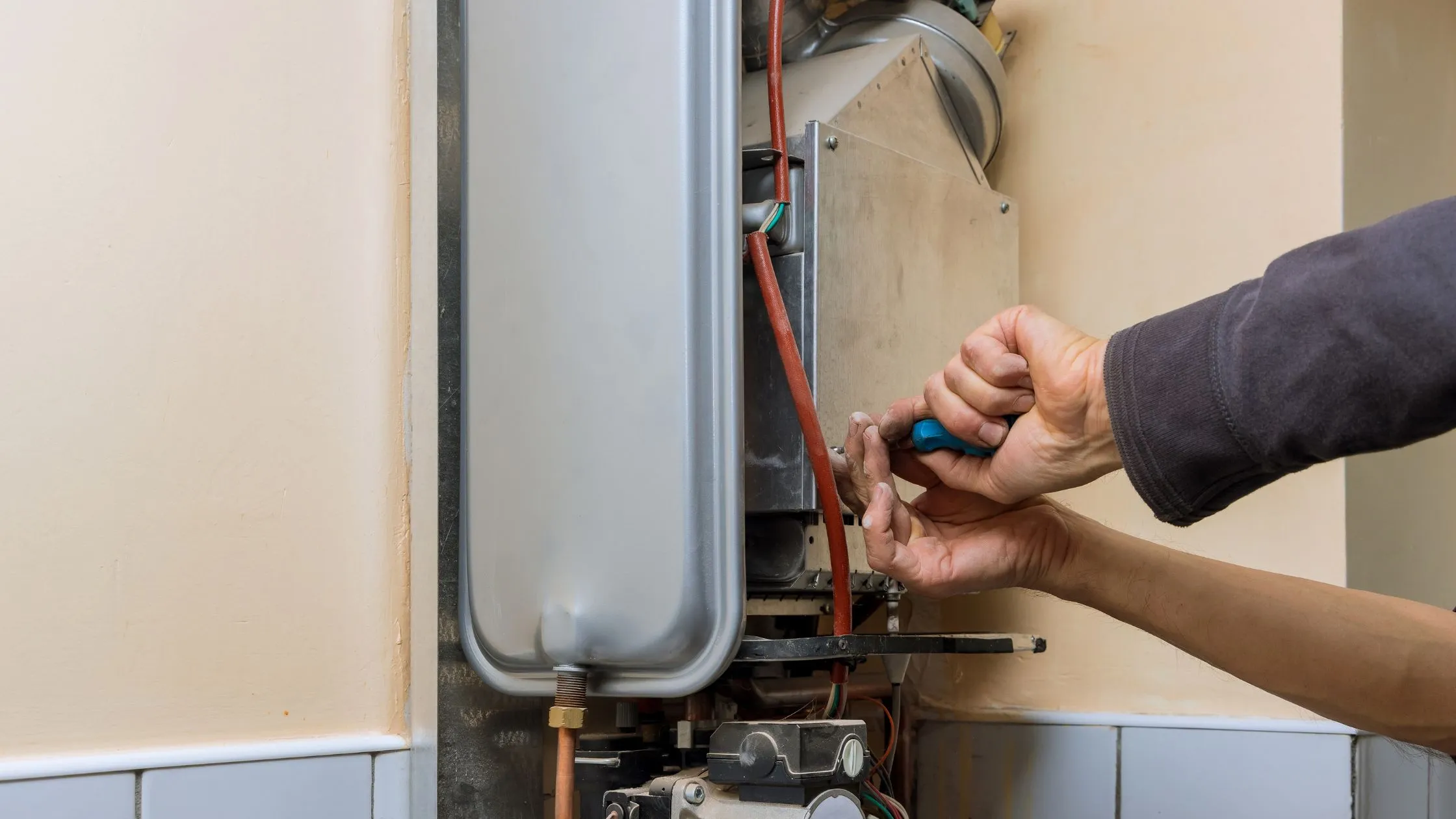


Thermostatic radiator valve: replace, set, cast iron
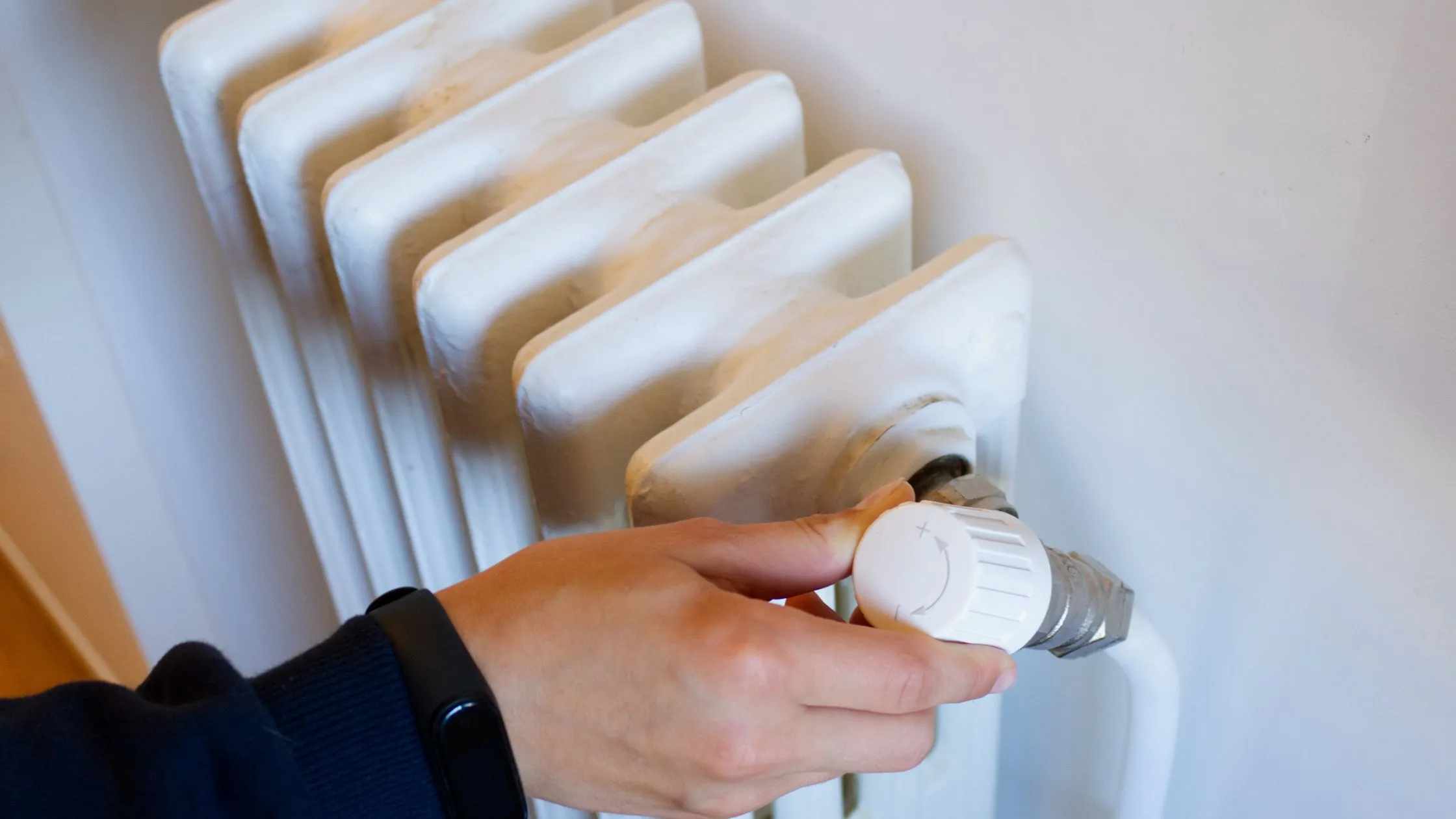
A thermostatic radiator valve has two parts: the numbered head, which unscrews and can be changed in a few minutes without draining, and the valve body screwed onto the radiator, with its cartridge, which needs the circuit isolated or drained to replace. On a cast iron radiator, fitting one is possible once the pipe size and old fittings are checked.
For fitting or replacement, see our heating engineers in Paris.
Head, body, cartridge: what each part does
- The head holds a temperature-sensitive element, liquid, wax or gas. As the room warms, it expands and presses on a small pin.
- The body, made of brass, is screwed onto the radiator inlet. The pin opens or closes the water flow inside it.
- The cartridge, or insert, is the moving part inside the body. On some models it can be replaced on its own.
One detail explains a lot of complaints: the head is not on or off. According to Danfoss's datasheet for its RAE elements, the scale is designed so that the head closes when it senses 2 °C more than the value shown. In between, it closes gradually. A lukewarm radiator in a room that is nearly at temperature is regulating, not broken.
Setting a thermostatic valve
The numbers 1 to 5 are not degrees, and each range has its own scale. According to Danfoss datasheets:
- Regus head: frost setting about 8 °C, then 1 about 12 °C, 2 about 16 °C, 3 about 20 °C, 4 about 24 °C, 5 about 28 °C.
- Aero head: frost setting about 7 °C, then 1 about 14 °C, 2 about 17 °C, 3 about 20 °C, 4 about 23 °C, 5 about 26 °C.
Same brand, same setting 3, but up to 2 °C apart on the other numbers. For another brand, look for the scale in its instructions, or put a thermometer in the middle of the room and adjust over two days. The French Energy Code (article R. 241-26) sets an average of 19 °C in a home: in practice, setting 3 in living areas and a lower setting in bedrooms comes close.
Two common mistakes. Turning the head to 5 does not heat faster: while the room is cold, the valve is already fully open, and 5 only delays the moment it closes. And a head hidden behind a curtain or radiator cover measures the radiator's heat, not the room's. In older Paris flats, where radiators are often boxed in wood or marble, remote-sensor heads exist: Danfoss makes them with a capillary of up to 2 metres.
Changing the head: no draining
The head unscrews, or unclips depending on the model, with no water escaping. The only trap is compatibility: each manufacturer has its own connection. Danfoss, for example, separates its RA connection from the threaded M30 x 1.5 connection, and sells specific heads for its older RA/V and RA/VL bodies. Note the brand and reference marked on the body, or take a photo, before buying. Fit the head following its instructions, then check that the radiator heats on a high setting and closes on the frost setting.
If the radiator stays cold after a new head, the pin in the body is probably stuck. How to free it is described in our guide on radiators that heat poorly.
Cartridge or body: when the water has to be dealt with
Three situations lead to the body or its cartridge: a pin that stays stuck despite your efforts, a leak around the stem, or a cracked body. The work involved differs:
- Leak around the stem: often the gland seal. On Danfoss RA-G bodies, the datasheet states it can be replaced without draining the system, with the heating running.
- Stuck cartridge: depending on the model, it is replaced after isolating the radiator or draining the circuit. The manufacturer's instructions give the method.
- Body to replace: the radiator must be isolated if it has two valves, or all or part of the circuit drained.
With central heating for the whole building (chauffage collectif), draining often means shutting a riser for several flats. The job is planned with the syndic (the building manager) and the building's heating contractor: our article on central heating in a cold flat explains who does what.
Cast iron radiators
The cast iron radiators in pre-war Paris buildings take a thermostatic valve very well. Three points need attention.
- Thermal mass. Cast iron takes a long time to warm and keeps giving off heat long after the valve closes. The room can overshoot by a degree: set one notch lower than with a steel radiator.
- Fittings. The old valve, in place for decades, is often seized on its union. Forcing it can bend the pipe or damage the radiator's thread. The new body must also match the existing size, often 15x21 or 20x27 (French designations for half-inch and three-quarter-inch pipe) in older flats.
- Single-pipe systems. Some older installations run water from one radiator to the next in series. A standard thermostatic body restricts the flow too much; there are low-resistance bodies made for single-pipe systems, such as Danfoss's RA-G.
What the rules say
According to France's Ministry for the Ecological Transition, new heat emitters, except wood heating, must have a manual shut-off and automatic control based on room temperature. A thermostatic valve does that on a water radiator. The order of 8 June 2023, in force from 1 January 2027, adds that any new heating system must include automatic temperature control. If you replace a radiator, plan for a thermostatic body rather than a plain valve.
When to call a professional
- The body leaks, or the cartridge stays stuck after a new head.
- You want to switch several radiators from plain valves to thermostatic valves.
- The old valve on a cast iron radiator will not come off.
- You have building-wide heating and a drain-down is needed.
Heating work is quoted, with the price given before any work, and the call-out charge inside Paris is 90 euros excluding VAT: see our prices page. Doing several valves in one visit avoids draining more than once.
Frequently asked questions
Can I change a thermostatic head without draining the radiator?
Yes. The head unscrews or unclips from the valve body without touching the water in the circuit. You only need a head that fits the body already there: note the brand and connection type marked on the body before you buy.
Which number should I set a thermostatic valve to?
On Danfoss Regus and Aero heads, setting 3 is about 20 °C, but the other numbers differ between ranges. French rules set an average of 19 °C in a home. Turning to 5 does not heat faster: it only pushes back the temperature at which the valve closes.
How do I know if the valve cartridge has failed?
With the head removed, the radiator should heat fully. If it stays cold while the others heat, and the pin does not move after a few presses, the cartridge or body is stuck. A leak around the stem points to a worn gland seal.
Can a cast iron radiator take a thermostatic valve?
Yes, by replacing the valve body with a thermostatic body of the right size. Cast iron heats and cools slowly, so control is less precise than with a light radiator. Removing the old valve needs care: old fittings are often seized.
Are thermostatic valves compulsory?
France's Ministry for the Ecological Transition states that new heat emitters must have a manual shut-off and automatic control based on room temperature. A thermostatic valve does that. An order of 8 June 2023, in force from 1 January 2027, also requires automatic temperature control on any new heating system.
In short
A thermostatic head can be changed without draining, as long as it fits the existing body. The body and cartridge need the circuit isolated or drained, which is planned with the syndic in buildings with shared heating. The numbers on the head are not degrees: setting 3 is around 20 °C on common Danfoss heads, but scales vary. On a cast iron radiator, a thermostatic valve works well once you allow for thermal mass, old fittings and a possible single-pipe circuit.
Thermostatic valves to replace in Paris?
Send us a photo of the valve body and the radiator, and we will tell you whether a new head is enough or the body needs changing. Fast response 7 days a week, 24 hours a day, with priority for emergencies. Réseau Tubulure works across Paris and the inner suburbs (92, 93, 94). Many of our plumbers speak English.
- Phone: +33 1 89 70 15 36
- Form: contact us
- WhatsApp: use the button on the site
Sources: Danfoss datasheets (Regus and Aero heads, RAE elements, RA-G bodies); French Ministry for the Ecological Transition, heating in buildings; order of 8 June 2023 on temperature control systems, Journal officiel of 15 June 2023. Accessed 27 October 2026. Number-to-temperature values apply to the ranges named.