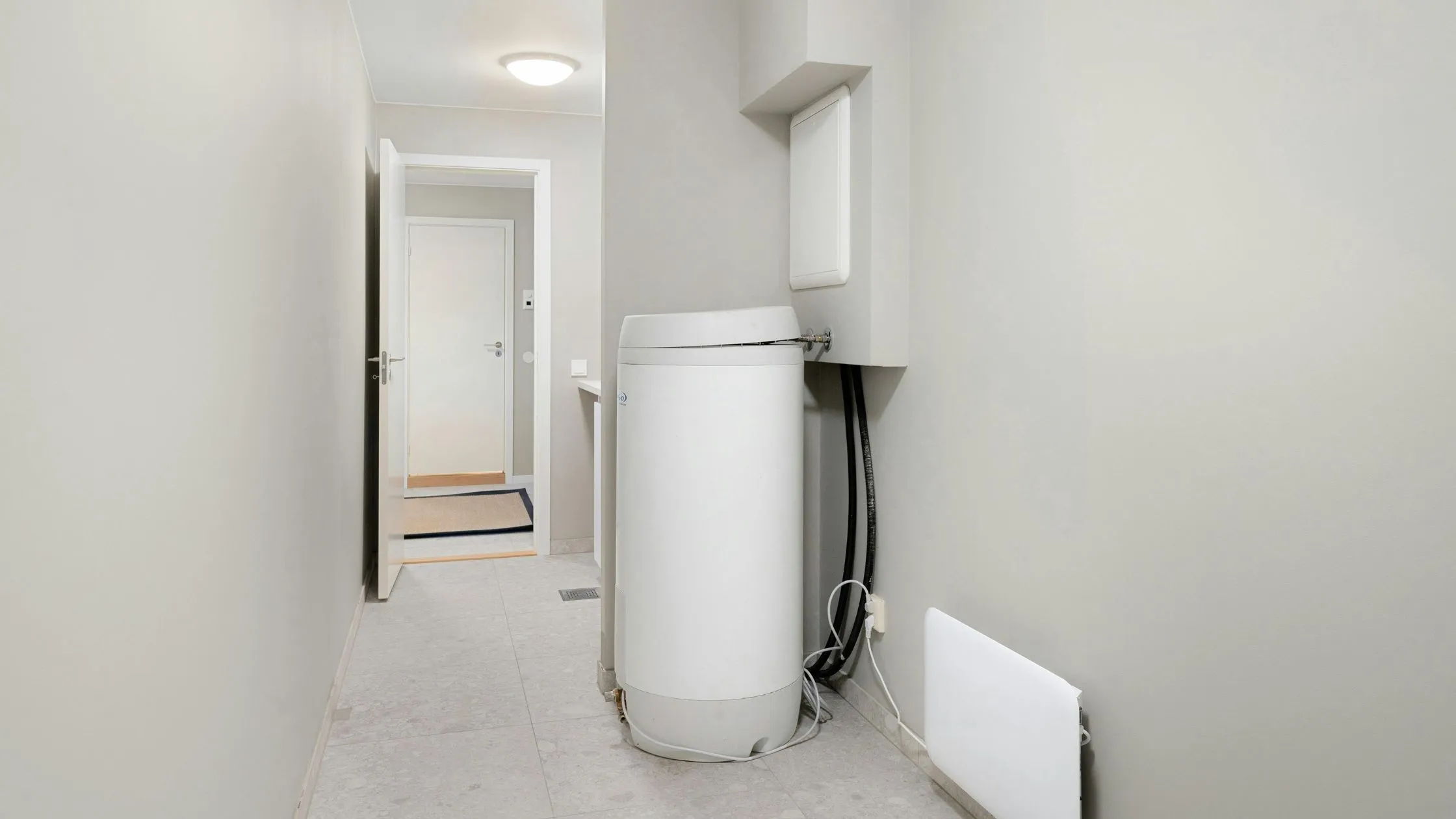


Water heater maintenance in France: tenant or landlord?

In a rented home in France, routine upkeep of the water heater is the tenant's job: operating the safety valve, having the tank descaled, replacing small seals. Replacing a worn-out unit, and any breakdown caused by age or a faulty installation, is the landlord's. That is what the law of 6 July 1989 and decree no. 87-712 of 26 August 1987 provide.
For servicing, repairing or replacing the unit, see our water heater service in Paris.
What the French texts actually say
Three texts work together, all published on Légifrance, the official French legal database.
- Law no. 89-462 of 6 July 1989, article 7 d): the tenant must take on "routine upkeep of the dwelling, of the equipment listed in the lease, and minor repairs", plus all the tenant repairs (réparations locatives) defined by decree, unless they are caused "by wear and tear (vétusté), poor workmanship, construction defect, accident or force majeure".
- The same law, article 6 c): the landlord must maintain the premises and carry out "all repairs other than tenant repairs" needed to keep the dwelling in normal condition.
- Decree no. 87-712 of 26 August 1987 lists the tenant repairs. Its heading "Heating, hot water production and taps" includes "rinsing and cleaning of heating bodies and pipework" and replacing "seals, valves and packing glands of taps". For gas appliances, it lists replacing "bimetal strips, pistons, membranes, water boxes, piezo ignition, valves and seals".
Finally, decree no. 2002-120 of 30 January 2002 on decent housing (logement décent) requires hot water equipment to be "in good working order", and the kitchen and bathroom to be supplied with hot water. A rented flat without hot water is not a minor inconvenience under French law.
What the decree does not say
The decree dates from 1987 and was written mainly with gas appliances in mind. It does not name the electric storage tank, the safety valve (groupe de sécurité), the heating element, the anode or the thermostat. That gap is where most disputes start.
Its article 1 gives the key, though: tenant repairs are "routine upkeep and minor repairs, including the replacement of comparable parts", resulting from normal use of the home. And the list is not closed: the annex lists repairs that "in particular" fall into this category. For a part that is not named, two questions settle it: is this routine upkeep or a small wear part? And did the fault come from normal use, or from the age of the appliance?
Part by part: who pays for what?
This is the most common split, subject to your lease and to the real cause of the fault:
- Operating the safety valve: the tenant. It is routine upkeep, at the frequency given in the manufacturer's manual.
- Draining and descaling the tank: generally the tenant, by analogy with "rinsing and cleaning of heating bodies".
- A seal on a fitting, a flexible hose: the tenant (the decree names the replacement of seals on water pipes).
- A worn safety valve: a grey area. On a recent unit it is often treated as a wear part paid by the tenant. On an old installation, its wear counts as age-related, so the landlord pays.
- A failed heating element or thermostat: it depends on the cause. A wear failure on an old tank is the landlord's. An element burnt out by scale because the tank was never serviced may be left to the tenant.
- A tank that has rusted through, replacing the water heater: the landlord, unless damage caused by the tenant is proven.
- A leak caused by faulty installation (safety valve with no drain, poor fittings): the landlord, as poor workmanship.
- Gas water heater or boiler: servicing and the small parts named in the decree are the tenant's. For a boiler that also heats the water, see our gas boiler maintenance guide for Paris. If you smell gas, leave the flat, ventilate if you can, and call 0 800 47 33 33 (GRDF gas emergency line, free, 24 hours a day) or 18 / 112.
What tips the balance: the cause in writing
In the grey cases, everything turns on one distinction: wear and tear, or lack of maintenance. Three documents matter:
- The plumber's report or invoice, which should describe the fault and its observed cause ("scaled element", "corroded tank", "safety valve blocked by scale"), with photos.
- The move-in inventory (état des lieux d'entrée) and, if possible, the age of the unit, shown on its rating plate.
- Your servicing invoices: a drain and descale carried out during the tenancy shows that routine upkeep was done.
A plumber records facts; a plumber does not settle the dispute. But a precise record prevents most disagreements.
Why maintenance matters more in Paris
Paris tap water is hard. The 518 hardness tests from the official sanitary monitoring published for Paris between 6 January and 30 June 2026 give a median of 26.3 °f (French degrees), with eight tests in ten between 24.4 and 29.7 °f (source: Hub'Eau, accessed 27 October 2026). This limescale coats the heating element, jams the safety valve and wears the unit out faster. A tank that is never drained reaches the end of its life sooner, and the question of who pays arrives with it.
At Réseau Tubulure, a tank drain and service costs EUR 380 excluding VAT, plus the call-out charge (EUR 90 excluding VAT within Paris). Details are on our prices page.
Tenants: what to do when the water heater fails
- Tell your landlord or letting agent in writing (email or letter), with the date, the symptom and photos.
- If it is leaking, switch off the tank's power and the cold water inlet, and have it made safe straight away: that is urgent whoever ends up paying.
- Do not have the unit replaced without written agreement. Having a small part repaired that is yours to pay for is your right; replacing the tank is not.
- Ask the plumber for a written diagnosis that states the cause.
If the water heater trips the breaker or no longer heats, our electric water heater repair guide helps you describe the fault before writing to your landlord.
Landlords: what is yours to pay
Replacing a tank at the end of its life, faults due to the age of the unit and installation defects are your cost. Use a gap between two tenancies to have an old tank checked, and record its age in the property file. When replacing, a model with a steatite element, protected from scale, does well in Paris: see our electric water heater installation guide.
Frequently asked questions
Is descaling the water heater the tenant's responsibility?
Generally yes. Decree no. 87-712 lists "rinsing and cleaning of heating bodies and pipework" as a tenant repair, and a drain with descaling is routine upkeep. Your lease may set out the split in more detail.
Who pays to replace the safety valve?
The decree does not name it. On a recent unit it is often treated as a wear part paid by the tenant. On an old installation, its wear counts as age-related and falls to the landlord.
Who pays for a new heating element in a rented flat?
It depends on the cause. A wear failure on an old tank is the landlord's. If the element burnt out because the tank was never serviced, the landlord may leave it to the tenant: the plumber's written diagnosis settles it.
Can my landlord refuse to replace a broken water heater?
No, if the fault comes from wear or a defect in the unit. The 1989 law requires the landlord to carry out all repairs other than tenant repairs, and the decent housing decree requires hot water equipment in good working order. Write to your landlord and keep a record of your exchanges.
Does the tenant have to have the water heater serviced every year?
We are not aware of any text requiring an annual visit for an electric tank, unlike a gas boiler. The tenant must, however, carry out routine upkeep: operate the safety valve and have the tank drained when it scales up.
In short
Routine upkeep and small parts are the tenant's, replacement and age-related faults the landlord's (law of 6 July 1989, articles 6 and 7; decree no. 87-712). The decree does not cover the electric tank part by part: in the grey cases, the cause written down by the plumber makes the difference. With hard Paris water, a regular drain protects both the unit and the tenant-landlord relationship.
Water heater service or fault: have it checked
Our plumbers drain and descale your tank, or diagnose the fault with a written report and photos, useful to tenants and landlords alike. Réseau Tubulure works across Paris and the inner suburbs (92, 93, 94), 7 days a week, 24 hours a day. Many of our plumbers speak English.
- Phone: +33 6 86 08 78 68
- Form: contact us
- WhatsApp: from the button on the website
Sources: Law no. 89-462 of 6 July 1989, articles 6 and 7 (Légifrance); Decree no. 87-712 of 26 August 1987 on tenant repairs, article 1 and annex (Légifrance); Decree no. 2002-120 of 30 January 2002 on decent housing, articles 2 and 3 (Légifrance); Hub'Eau, drinking water sanitary monitoring results, total hardness, Paris, 2026; GRDF, gas emergency (grdf.fr). All accessed 27 October 2026. Quotations from French legal texts are our translations. Prices: Réseau Tubulure public price list, October 2026.