

Damp Patch on the Ceiling: Neighbour's Leak, Condensation or Infiltration
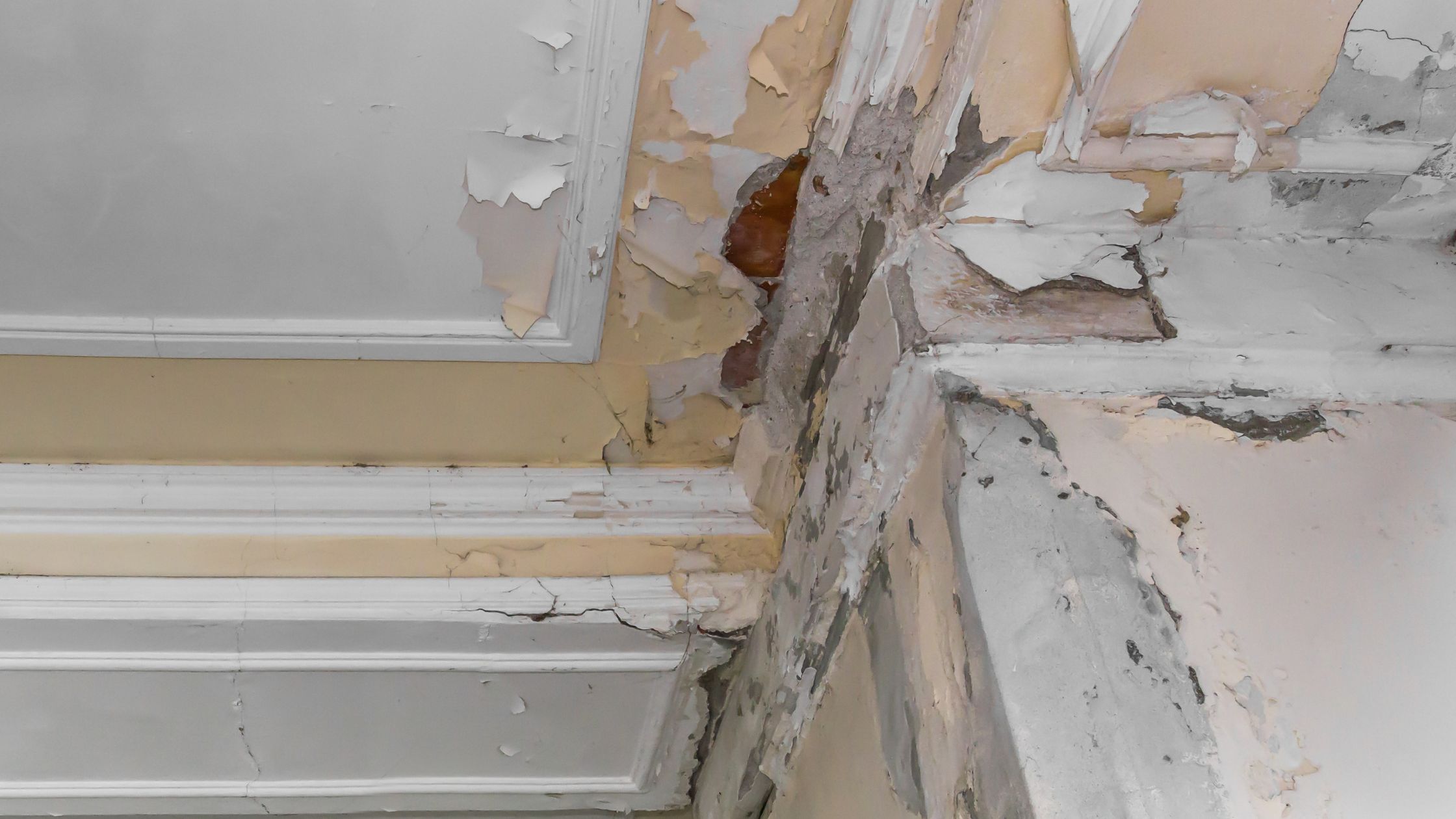
A brown stain slowly widening across the living room ceiling, a ring appearing in the corner of a bedroom, paint blistering above the shower: ceiling damp is one of the most common problems in Parisian flats, and one of the most frequently misdiagnosed. The immediate reflex is usually to blame the neighbour upstairs. Yet three radically different causes produce very similar symptoms, and getting the diagnosis wrong wastes weeks while the damage progresses.
This guide helps you distinguish a leak from the flat above, condensation linked to ventilation, and infiltration through the facade or roof. This distinction is not theoretical: it determines who must intervene, who pays, and which insurance policy applies.
The three possible origins of ceiling damp
Before approaching a neighbour or a building manager, understand that water on a ceiling can come from three distinct sources, which involve neither the same responsibilities nor the same repairs.
A leak from the flat above
This is the best known hypothesis and often the first considered. A faulty pipe, a worn shower seal, a washing machine connection or a poorly sealed bath in the flat above lets water through, which crosses the floor and emerges in your home. This cause is generally characterised by a well defined stain, often located directly beneath a wet room in the flat above, and which evolves in bursts depending on how the equipment concerned is used.
Condensation linked to ventilation
Far more common than people think, condensation results from overly humid indoor air settling on cold surfaces. It typically affects wall corners, poorly insulated areas and ceiling edges, and shows up as scattered black mould rather than a clear ring. It worsens in winter, when the temperature gap between indoor air and walls is greatest, and has nothing to do with a leak.
Infiltration through the facade or roof
For homes on the top floor or along a gable wall, rainwater can seep in through a roof defect, a blocked gutter, a degraded facade joint or a crack. This cause is recognised by its direct correlation with rainfall: the stain worsens after rain and stabilises in dry weather.
How to tell the three causes apart
A few simple observations, well within your reach without any equipment, strongly orient the diagnosis before you even call a professional.
First look at the shape of the mark. A sharp ring, with a marked brown outline and a lighter centre, almost always indicates a genuine water arrival, so a leak or infiltration. Diffuse black patches, scattered and without a clear outline, point towards condensation.
Then note the rhythm of appearance. A stain that grows after every heavy rain indicates infiltration. A stain that evolves independently of the weather, but seems linked to when the neighbour uses their bathroom, indicates a leak. Damp that appears in winter and recedes in spring indicates condensation.
Finally, note the location. A stain in the middle of the ceiling, beneath a wet room in the flat above, suggests a leak. A stain around the edges, in corners or along an exterior wall, suggests condensation or infiltration.
Condensation, a widely underestimated cause
This point deserves emphasis, because a significant number of neighbour disputes arise from damp wrongly attributed to a leak when it actually comes down to ventilation. A well insulated Parisian flat occupied by several people produces a considerable amount of moisture daily: showers, cooking, drying laundry, breathing. If ventilation cannot evacuate this vapour, it condenses on the coldest surfaces in the home.
Typical signs are persistent misting on windows, black mould in corners and behind furniture, a musty smell, and damp affecting several rooms rather than a single point. In this case neither the neighbour nor the building manager is at fault: the solution lies in improving ventilation and airing habits, not in a leak search.
Who must intervene, depending on the cause
This is where the diagnosis takes on its full practical importance, because the procedures differ radically.
If the origin is a leak in the flat above, the process runs through the neighbour concerned and your respective insurers. Our article on water damage in a Paris apartment details the claim procedure and how costs are shared.
If the origin is infiltration through the roof or facade, this concerns the building's common areas: the building manager must be notified, and the building's insurance applies. Our article on water damage in a Paris condominium clarifies each party's role.
If the origin is condensation, responsibility is shared between the occupant, for their airing habits, and the landlord or the building, if the ventilation system itself is faulty or absent.
When the leak does not come from where you think
A further difficulty sometimes complicates the diagnosis: water does not always follow a simple vertical path. It can travel horizontally along a slab, follow a service duct, work around a beam, and emerge several metres from its actual origin. A stain in your bedroom may therefore come from a leak located beneath your neighbour's kitchen.
This is precisely why an empirical diagnosis quickly reaches its limits, and why a professional leak search becomes necessary as soon as the origin is not obvious. Our guide on detecting a hidden water leak details the methods used.
What a professional diagnosis brings
Faced with damp whose origin remains uncertain, a properly equipped professional decides where observation alone hesitates. A thermal camera reveals the temperature differences characteristic of a water arrival. A moisture meter measures the actual humidity level in the material and distinguishes a merely cool area from an actively wet one. The meter test confirms or rules out an active leak in the network.
This diagnosis produces a written report identifying the origin and its location. This document has decisive practical value: it directs the right insurer towards the right coverage, and avoids the classic deadlock where each party passes responsibility to the other. Our leak detection service operates in this context across Paris and the inner suburbs.
Why you should not wait
Ceiling damp left untreated never stabilises on its own. Water continues to saturate plaster and concrete, encourages mould growth with real health consequences, degrades paint and coatings, and can eventually affect structural elements. What starts as a repainting job turns, after several months of inaction, into a far heavier project.
On the insurance side too, delay works against you. Policies set deadlines for reporting a claim after discovery, and an insurer may reduce coverage if it considers the worsening resulted from negligence in dealing with the problem.
Frequently asked questions
How do I know the leak really comes from the flat above?
The best clue remains correlation with their usage: if the stain dampens after their showers or laundry, the trail is solid. But only a professional leak search provides certainty, since water can travel several metres before becoming visible.
My neighbour refuses to have their flat checked, what can I do?
First have a professional diagnosis carried out in your own home, documenting the probable origin. This written report is a solid basis for notifying the building manager, then your insurer, who has the means to advance the case with the flat concerned.
Can condensation really stain a ceiling like a leak?
Yes, in advanced cases. Chronic condensation eventually produces rings and paint detachment resembling those of a leak. The difference lies mainly in how the stains are distributed, diffuse and around the edges for condensation, localised for a leak.
Should I wait for it to dry before repainting?
Absolutely, and above all only after treating the cause. Repainting over a still damp surface traps the moisture, makes the new paint blister within weeks, and masks the real progression of the problem, delaying proper treatment.
In summary
Ceiling damp is not automatically a leak from the neighbour. Three distinct causes, leak, condensation and infiltration, produce similar symptoms but call for entirely different interventions and responsibilities. The shape of the stain, its rhythm of appearance and its location orient the diagnosis, but only a professional search provides the certainty needed to approach the right party.
Reseau Tubulure identifies the exact origin of ceiling damp in Paris and the inner suburbs, with a detailed report usable for your insurance claim. Contact us for a precise diagnosis.
Contact Réseau Tubulure
Need a plumber or air conditioning specialist in Paris? Réseau Tubulure responds quickly throughout Paris and Île-de-France.