

Water Damage in Your Flat: Who to Call, Who Pays, What to Do in an Emergency
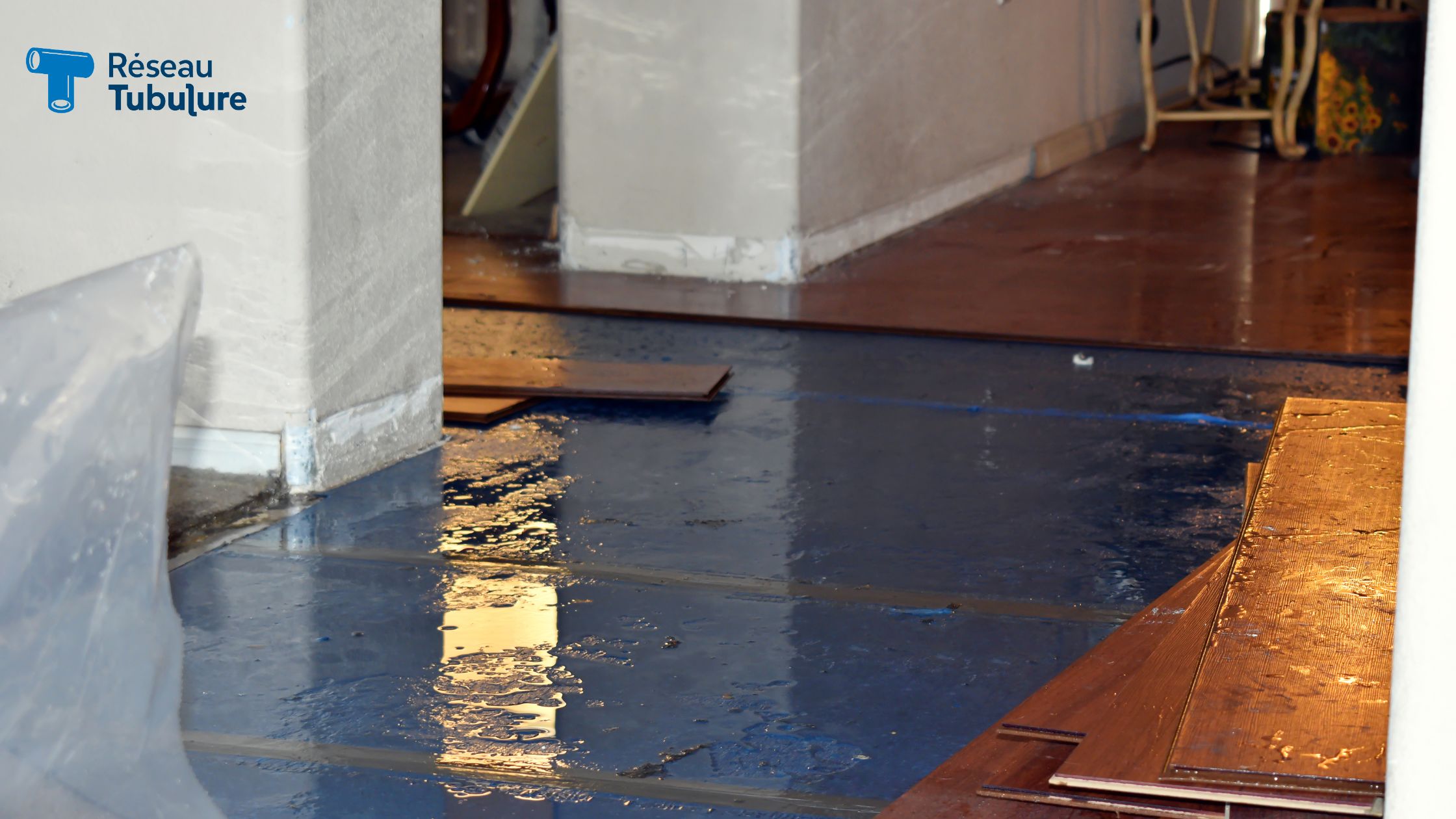
Water damage in a flat is always a stressful situation. Water seeping through the ceiling, a damp wall, a flooded floor, a neighbour affected… In Paris, where buildings are often old and pipework is shared, acting quickly and in the right order is essential to limit the damage and avoid disputes.
Understanding the Situation
Water damage refers to any incident caused by a leak, infiltration, or overflow that results in material damage. In a flat, the causes vary: a burst pipe (visible or concealed), a broken washing machine hose, a faulty toilet cistern, a water heater problem, or a leak from a neighbour or shared areas.
The key point: the person responsible is not always the one who suffers the damage. This is why identifying the source of the leak quickly and acting methodically is so important.
What to Do Immediately
Shut Off the Water and Limit the Damage
The very first action is to cut off the water supply. If the leak is in your flat, close the individual stopcock. If water is approaching an electrical outlet, switch off the electricity at the fuse box to eliminate any risk.
Identify the Source of the Leak
Try to determine whether the leak is coming from your flat, a neighbour (above, below, or next door), or the shared areas. Even if you’re not certain, note what you observe: the sound of running water, the damp area, the time it appeared.
Protect Your Home and Gather Evidence
Take photos and videos of the damage (ceiling, walls, floor, furniture). This evidence is essential for your insurance file.
Who to Call First
Call an Emergency Plumber
Whatever the suspected source, the leak must be stopped as quickly as possible. In Paris, Réseau Tubulure responds rapidly in flats and apartment buildings to locate and stop the leak, carry out a technical assessment, and provide an intervention report for your insurer.
👉 Contact an Emergency Plumber in Paris
Notify the Building Manager
If the leak concerns or appears to concern the shared areas, inform the property manager immediately.
Contact Your Home Insurer
A water damage claim must be filed within 5 working days of discovering the incident.
Water Damage: Who Pays for What?
Leak in Your Own Flat
If the leak comes from your own fixtures (tap, water heater, pipe in your flat), your home insurance covers the damage according to your policy terms.
Leak from a Neighbour
If the water comes from the flat above or next door, the responsible neighbour’s insurance covers the damage caused in your home. A water damage claim form agreed between both parties helps clarify the situation quickly.
Tenant or Owner: Who Is Responsible?
- The tenant is responsible for routine maintenance (seals, hoses, toilet cistern).
- The owner is responsible for repairs related to wear and tear or concealed pipework.
Key Steps for Filing a Water Damage Claim
- Complete a jointly agreed water damage claim form if a neighbour is involved.
- Attach photos, invoices, and the plumber’s intervention report.
- Send the claim to your insurer within the required timeframe.
- Wait for an expert assessment if one is requested.
Why Choose Réseau Tubulure in Paris
- Fast response in Paris and Île-de-France
- Experienced and certified plumbers
- Precise diagnosis, even for concealed leaks
- Transparent quotes and lasting repairs
- Support throughout the insurance claims process