

7 Signs It's Time to Replace Your Water Heater (Don't Ignore Them)
7 Signs It’s Time to Replace Your Water Heater (Don’t Ignore These)
Your water heater has been sending signals for weeks. The water isn’t as hot as it used to be, you’re hearing strange sounds during heating cycles, or there’s a trace of moisture under the tank you’ve been trying to ignore. These signals are your water heater telling you it’s nearing the end of its life — and that if you don’t act now, it’s likely to fail at the worst possible moment.
In this article, we list the 7 unmistakable signs, what they mean technically, and what you should do in each case. Because a planned replacement is always cheaper and less stressful than an emergency breakdown.
Sign 1 — The Hot Water Isn’t Really Hot Anymore
This is the first signal most people notice, and usually the most gradual. At first, the water just takes a little longer to heat up. Then you find yourself pushing the mixer tap further towards hot without thinking. Then you realise your showers are cooler than they used to be even with the tap at full heat.
What it indicates: in the vast majority of cases, the heating element is heavily scaled with limescale. Coated in calcium deposits, it can no longer transfer heat to the water efficiently. The unit consumes more electricity to produce less hot water. In Paris, where water is very hard, this phenomenon accelerates significantly after 7-8 years.
What you should do: if your water heater is under 7 years old, replacing the heating element alone may be worthwhile. Beyond that age, the cost-benefit balance clearly favours replacing the entire unit — especially if you’re also noticing other signs.
Sign 2 — Unusual Noises During Heating
Banging, crackling, gurgling, whistling: if your water heater is making sounds you didn’t hear before, it’s a symptom worth taking seriously. These sounds are produced by limescale deposits expanding on the heating element during heating cycles — a bit like ice cracking as it warms up.
What it indicates: limescale build-up is advanced. The heating element and potentially the bottom of the tank are coated with a thick layer of scale. This layer acts as thermal insulation around the element, causing it to overheat locally and potentially leading to premature failure.
What you should do: if the noises are recent and the unit is under 10 years old, draining and descaling may extend its life by 2-3 years. If the unit is over 10 years old or if noises persist after descaling, plan the replacement promptly.
Sign 3 — Discoloured or Gritty Hot Water
If the hot water coming from your taps has a slightly orange or reddish tint, or contains small rust-coloured solid particles, this is a serious warning sign that many people only discover when filling a white bath or making coffee.
What it indicates: the tank of your water heater is corroding from the inside. The corrosion may be coming from an exhausted magnesium sacrificial anode (whose job is to corrode instead of the tank), or from a tank that has already developed multiple microscopic holes. This level of advanced corrosion means the tank can leak or fail at any moment.
What you should do: contact a plumber quickly to arrange replacement. Do not wait: a tank corroding from the inside can rupture suddenly, causing flooding in your apartment.
Sign 4 — A Leak or Moisture Around the Tank
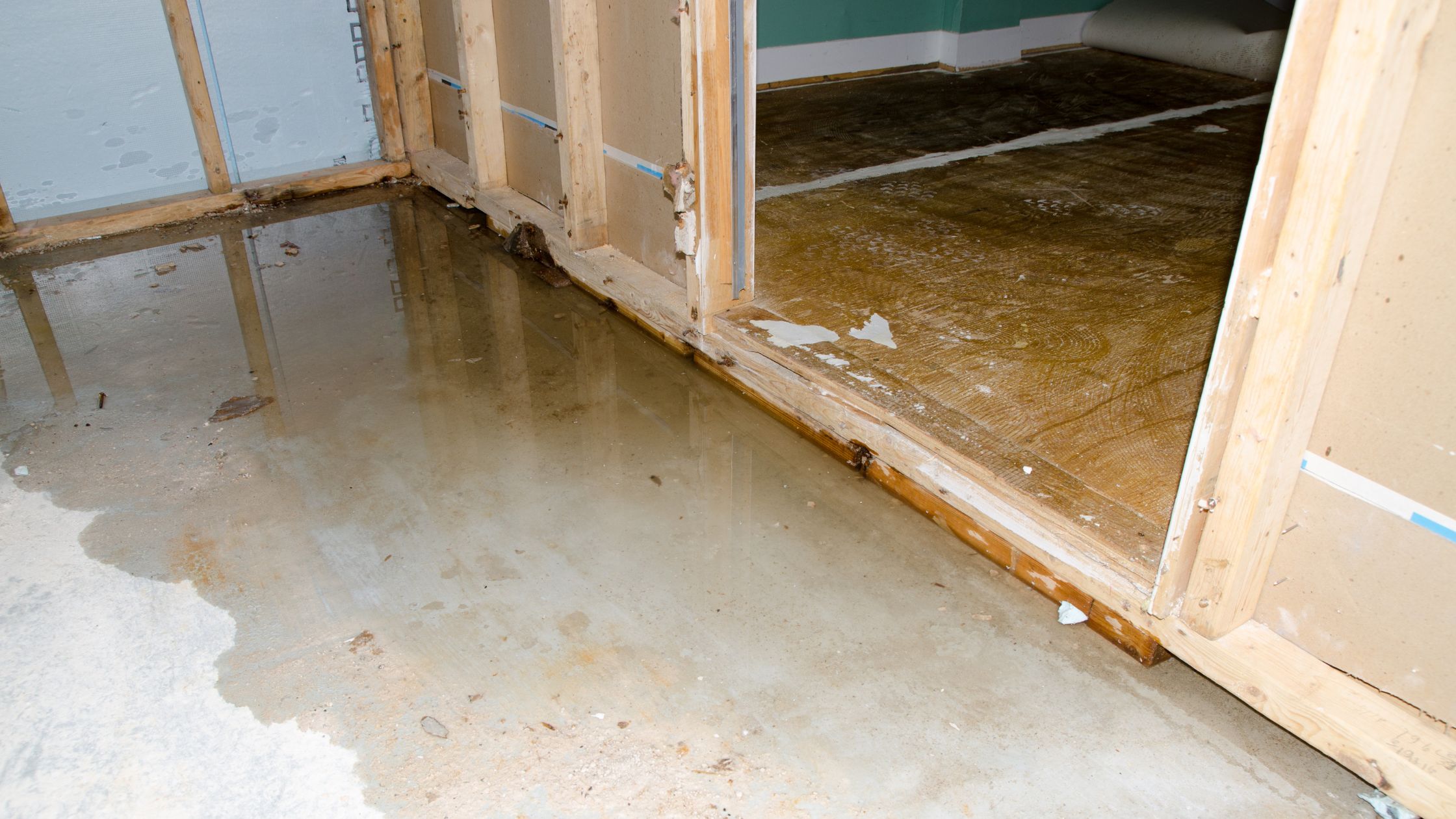
A damp patch under the tank, a trickle running down the wall, or a puddle that reappears regularly under the unit: these are signals you should never ignore. Even if the leak seems minor, it points to a structural problem.
What it indicates: either the pressure relief valve (the small red or white device on the supply pipe) is worn and leaking outside normal heating cycles, or the tank itself has a hole. The pressure relief valve can be replaced alone for a few dozen euros. But if the leak is coming directly from the tank, replacement is unavoidable.
Sign 5 — An Unexplained Rise in Your Electricity Bill
Your habits haven’t changed, you haven’t bought new appliances, yet your electricity bill has gradually increased over the past few months. The water heater is often the prime suspect, and rarely without reason.
What it indicates: a water heater scaled with limescale has to run its heating element for longer to reach the same temperature. A unit in perfect condition might heat up in 2-3 hours on an off-peak tariff. A heavily scaled unit can run for 6-7 hours for the same result. The overconsumption can reach 30 to 50% depending on the extent of build-up.
What you should do: compare with your consumption for the same period last year (via your electricity provider’s online account). If the increase is significant and unexplained, have your water heater inspected.
Sign 6 — The Unit Is Over 10-12 Years Old
This isn’t a breakdown symptom, but it may be the most important sign on this list. Age alone is a valid reason to plan a replacement, even if everything appears to be functioning normally.
What it indicates: at 10-12 years, all the internal components of a Parisian water heater are statistically at or near end of life. The element is heavily scaled, the anode is depleted, and the tank is weakened by years of internal corrosion. The unit might last another 2 years or fail in 3 months — it’s impossible to predict with certainty.
Sign 7 — Repeated Breakdowns and Repairs
Your water heater has already been repaired once. Then a second time. The element was replaced, the thermostat changed, and now there’s a new problem. If you’re at this point, you’ve entered what plumbers call the “breakdown spiral”.
What it indicates: when a unit keeps breaking down, it’s rarely an isolated problem. It’s a sign that the entire system is worn out and that the cost-versus-remaining-lifespan balance clearly favours replacement. Each additional repair is money spent delaying the inevitable.
What you should do: ask your plumber directly at the next call-out: “Is it worth repairing, or is it wiser to replace?” A good plumber will give you an honest answer based on the actual condition of the unit.
Summary: Repair or Replace?
Here’s our simple decision rule:
- 1 sign from the 7 + unit under 7 years old → repair possible
- 2 or more signs + unit between 7 and 10 years old → assessment by a plumber recommended
- Any sign + unit over 10 years old → replacement recommended
- Sign 3 (discoloured water) or Sign 4 (tank leaking) → immediate replacement, regardless of age
When it comes to water heaters, a planned replacement is almost always cheaper than a crisis repair. An organised replacement costs less (no emergency surcharge), lets you choose the right model (with the possibility of accessing French government grants for a thermodynamic model), and means you don’t spend several days without hot water.
Réseau Tubulure: Water Heater Replacement in Paris
- All brands: Atlantic, Thermor, Ariston, Chaffoteaux, Bosch, Stiebel Eltron...
- All types: electric storage tank, thermodynamic, instantaneous gas
- Removal of the old unit included
- Clear quote with available options — no sales pressure
Are you looking for plumbing services? Contact us