

10 Tips to Prevent Blocked Drains in Your Paris Apartment
10 Tips to Prevent Blocked Drains in Your Paris Apartment
Blocked drains are one of the most common plumbing problems in apartments — and one of the most preventable. A shower that barely drains, a kitchen sink that backs up, a blocked toilet: these situations are frustrating, sometimes urgent, and usually the result of habits that have built up over months. In a Parisian apartment with older pipes and hard water, the risk is even higher than elsewhere.
The good news: a few simple daily habits are enough to prevent the vast majority of blockages. Here are the 10 practical tips our plumbers recommend to their clients.
Why Drains Block — and Why It’s Worse in Paris
Before the tips, a quick overview. Drain blockages form through gradual accumulation: hair, soap scum, cooking grease, limescale residue, paper, wet wipes. In Paris, two factors make things worse than in other cities:
- The hard water of the Île-de-France region leaves mineral deposits on the inner walls of pipes, gradually reducing their internal diameter and giving other debris more surface to cling to
- Older buildings (the majority of Paris’s housing stock was built before 1970) have cast-iron or stoneware pipes that age, corrode, and develop rough internal surfaces — perfect for trapping deposits
The 10 Tips to Prevent Blocked Drains
Tip 1 — Fit a Hair Catcher in Every Shower
Hair is the number one enemy of bathroom drains. A single hair causes no problem, but dozens of hairs accumulating over a few weeks form a mass that traps soap, limescale and all other debris. The result: a solid blockage a few months later.
The simplest and most effective solution: a silicone or stainless steel hair catcher placed over your shower drain. It costs between €3 and €10, cleans in 10 seconds, and can save you a drain unblocking call-out costing €80-150. Clean it after every shower — or at least twice a week.
Tip 2 — Never Pour Grease or Oil Down the Sink
Cooking fat, frying oil, sauces: anything greasy and hot seems to flow easily down the sink. But once inside the pipe, the grease cools, solidifies, and sticks to the walls. It gradually builds up a layer that narrows the water passage and catches everything that comes after it.
The right habit: let fat cool in the pan or a container, then dispose of it as solid waste in the bin. For greasy residue on dishes, wipe with absorbent paper before rinsing. This one habit alone can double or triple the life of your kitchen trap.
Tip 3 — Never Flush Wet Wipes Down the Toilet
Even wipes labelled “flushable” or “biodegradable” do not dissolve in water the way toilet paper does. They remain intact in pipes for hours or days, catch on the rough surfaces of older pipes, and eventually form massive blockages — sometimes in the building’s shared drainage stack.
In toilets, only toilet paper goes down. Everything else — wet wipes, cotton pads, tampons, paper tissues — goes in the bin. This one rule is responsible for the majority of stack clearances in Parisian apartment buildings.
Tip 4 — Flush Your Drains with Hot Water Weekly
Hot water is a simple, natural ally against grease accumulation in pipes. Pour a kettle or pan of very hot water (not necessarily boiling if you have PVC pipes — water at 60-70°C is sufficient) down your kitchen and bathroom sinks once a week. The heat softens and dislodges fatty deposits before they harden and accumulate.
This tip is particularly effective in the kitchen, where cooking grease is the main cause of blockages. Make it a Sunday evening habit.
Tip 5 — Use Baking Soda and White Vinegar Monthly
The baking soda and white vinegar combination is an effective natural cleaner for maintaining your drains without aggressive chemicals. How to use it: pour 3 tablespoons of baking soda down the drain, then immediately add 250 ml of white vinegar. The fizzing reaction dislodges organic residue and soap deposits from the pipe walls. Leave for 15-20 minutes, then flush thoroughly with hot water.
Do this once a month in all your sinks, basins and showers. It’s inexpensive (a few cents), environmentally friendly, and maintains your pipes better than chemical products which, over time, can attack seals and plastic traps.
Tip 6 — Clean Your Traps Regularly
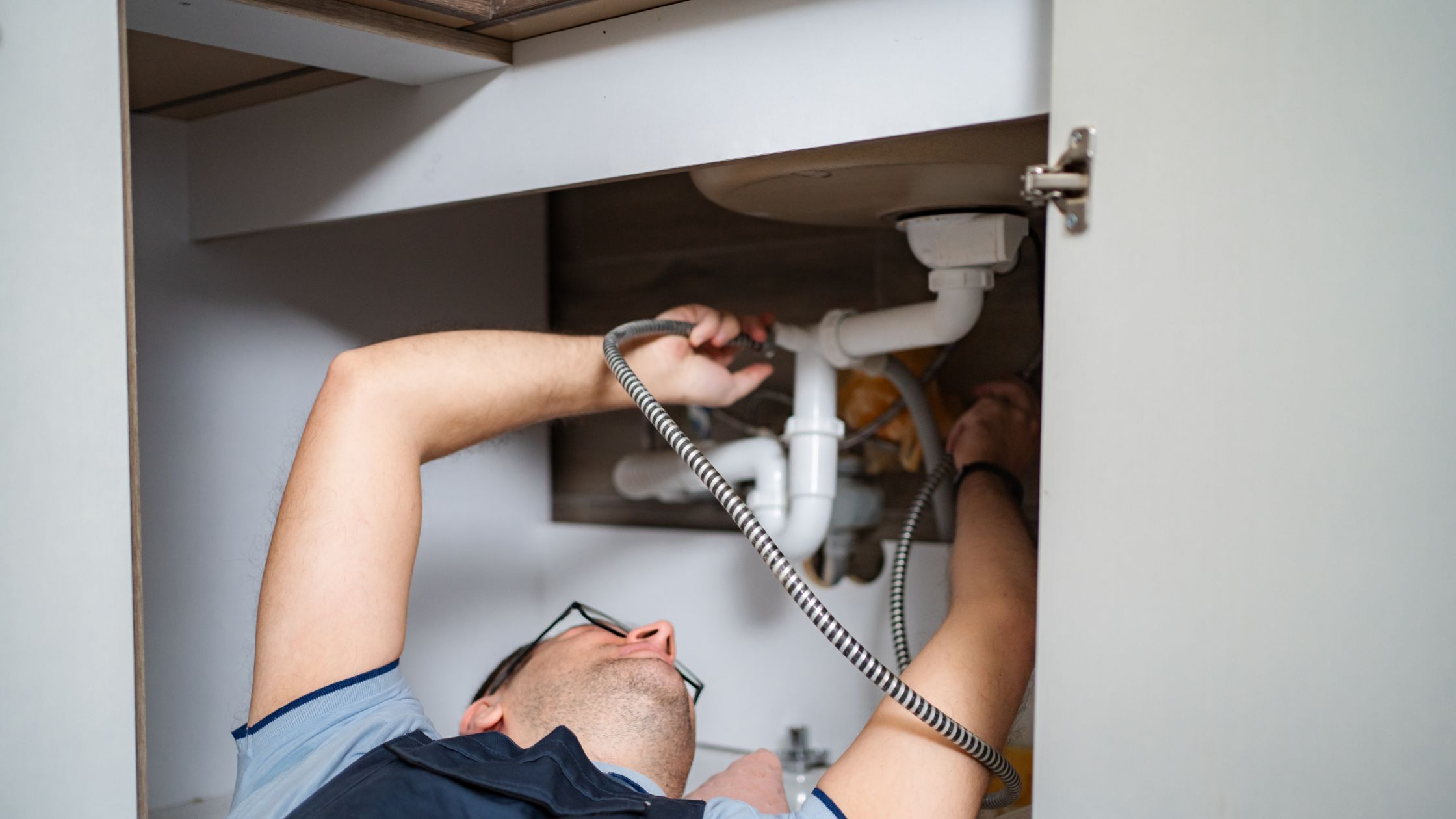
The trap (siphon) is the U-shaped bend under your sink or basin. Its role is to hold a column of water that prevents sewer gases from rising — but it’s also where the first deposits collect before forming a full blockage.
Unscrew the trap (place a bucket underneath first), empty its contents, scrub the inside with an old brush, and reassemble. Do this every 3 to 6 months depending on usage. If your trap still smells after cleaning, it’s probably time to replace it — the part costs less than €10 at any hardware store and fits without tools.
Tip 7 — Avoid Chemical Drain Cleaners as Preventive Treatment
Counter-intuitively, using chemical drain cleaners preventively is a bad idea. These products (caustic soda, strong acids) are formulated to attack existing blockages, not to maintain clean pipes. Used regularly on healthy drains, they attack seals, soften PVC pipes, and can accelerate corrosion in metal traps.
For preventive maintenance, stick to natural methods (baking soda, vinegar, hot water) or simple mechanical cleaning of the traps. Reserve chemical products for clearing an existing blockage, as a one-off treatment.
Tip 8 — Fit Flow Restrictors on Your Taps
A moderate, steady flow is better for your pipes than an excessively high one. Aerators and flow restrictors allow you to regulate flow while saving water. As a bonus, they also reduce the noise of water in pipes — sometimes noticeable in older Parisian buildings.
Tip 9 — Have Your Pipes Professionally Maintained Every 2-3 Years
Even with every precaution, pipes accumulate deposits over time — especially in Paris with hard water. A professional high-pressure hydro-jetting clear-out every 2 to 3 years removes these build-ups before they become full blockages.
Tip 10 — Act Quickly at the First Signs of Slow Drainage
A blockage doesn’t form overnight. There are always early warning signs: water starts draining more slowly than usual, you hear gurgling sounds from the pipes, a slight smell rises from the drain. These signals, which many people ignore for weeks, indicate that a blockage is forming.
If you intervene at the first signs — baking soda and vinegar, cleaning the trap, or calling a plumber if it persists — you avoid the emergency situation. A partial blockage can be cleared in 20 minutes. A complete blockage in a building stack can take several hours and cost significantly more.
Summary: The Most Common Blockages by Room
Bathroom and Shower
Main culprit: hair, followed by soap and shower gel forming a compact paste with limescale. Priority preventive solution: hair catcher and trap cleaning every 3 months.
Kitchen
Main culprit: cooking grease and food residue (leftover sauce, coffee grounds rinsed down the sink). Priority preventive solution: no grease down the sink and weekly hot water flush.
Toilet
Main culprit: wet wipes and other non-soluble objects. Priority preventive solution: strict rule — only toilet paper goes down the bowl. Everything else in the bin.
Bathroom Basin
Main culprit: soap, toothpaste, shaving stubble. Usually the easiest to clear as the trap is easily accessible. Preventive solution: monthly trap cleaning.
When to Call a Plumber
Despite all these precautions, drains can still block. Here are the situations where it’s better not to attempt a DIY fix:
- Water backs up in multiple sinks or showers simultaneously (sign of a blockage downstream on a shared pipe)
- Sewer smells persist even after cleaning all the traps (sign of a deeper problem)
- The blockage resists a plunger and drain unblocker after several attempts
- You hear gurgling from other rooms when using the sink or toilet
Contact us for a fast, free quote.