

Plumbing Survey Before Buying an Older Paris Apartment

You have found the flat, the neighbourhood suits you, the price makes sense. One unknown is rarely examined seriously before signing: the actual state of the plumbing. In an older Parisian building, this item can represent considerable work, and it has the particular feature of appearing in none of the mandatory surveys provided at the time of sale.
This guide details the points to check before committing, what the statutory surveys actually cover, and when a further inspection is fully justified given the sums at stake.
What the mandatory surveys do not tell you
The technical survey file provided during a sale contains several useful sections, but none genuinely covers the functional state of the plumbing. The lead survey concerns paintwork, not pipes. The asbestos survey covers construction materials. The energy performance assessment evaluates heating from a consumption angle, without judging the state of the installations. As for the gas and electrical surveys, they cover the safety of those specific systems, not the water network.
In other words, you can buy a flat whose surveys are all compliant, and discover after moving in that the pipes are at the end of their life, the pressure is inadequate or the waste network is undersized. This blind spot justifies personal vigilance during viewings.
The eight points to check during viewings
None of these checks requires technical skill, but all provide valuable indications.
The material of the visible pipework
Look under the sinks, in service cupboards, in the bathroom. Lead pipes, recognisable by their dull grey colour and soft appearance, or rusted galvanised steel, indicate an old network due for replacement. Our article on replacing lead or cast iron pipes details the scale of such a project.
Pressure and flow
Open several taps at once, including the shower. A flow that collapses as soon as two water points run together reveals a scaled or undersized network, a defect that affects daily comfort and is not trivial to correct.
The colour of the water on first draw
Run the cold water after a period without use. Brownish or cloudy water at start-up indicates internal corrosion of the pipes, generally a sign of a network at the end of its life.
Waste water drainage
Run water generously in the sink, basin and shower, and watch the drainage speed. Slow drainage, gurgling or rising odours signal a clogged or poorly vented waste system, a structural problem more costly than a simple unblocking.
The age and condition of the water heater
Find the rating plate, which usually carries the year of manufacture. A tank over twelve years old is nearing the end of its life. Also check for limescale or rust around the safety valve, a sign of advanced ageing.
The condition of the boiler
Systematically ask for the annual servicing certificates from recent years. Their absence is itself information: an unserviced appliance carries a significantly higher risk of breakdown, and annual servicing is a legal obligation for gas boilers.
Traces of past damp
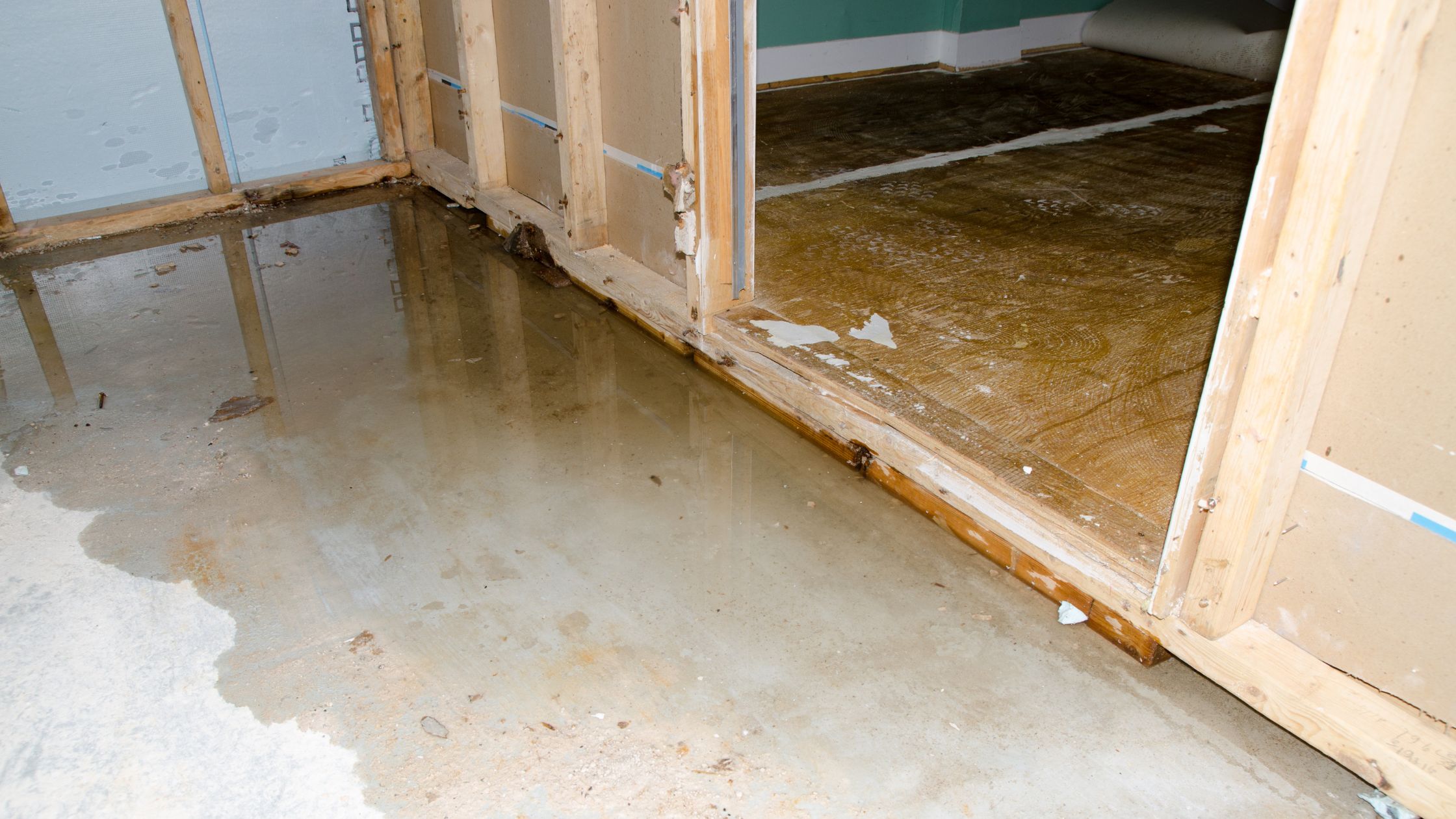
Examine ceilings, wall corners and under sinks for rings, blistered paint or localised touch-ups. A recent, isolated repair on a ceiling may mask water damage poorly treated at source.
The condition of the common areas
This is the most frequently neglected point, and yet one of the heaviest financially. Look at the riser pipes in cellars or accessible service ducts. A dilapidated collective network signals works to be voted at the general meeting, whose share you will bear as a future co-owner.
Questions to ask the seller and the building manager
Some information cannot be deduced from a viewing and must be requested explicitly. Ask the seller about the history of water damage in the property and about plumbing works carried out, with invoices if possible.
From the building manager, request the minutes of the last three general meetings and the building's maintenance record. These documents reveal works voted but not yet carried out, ongoing studies on the networks, and recurring incidents in the building. A vote on renovating the riser pipes commits an expense you inherit if the sale completes after the vote.
Also check whether a works fund exists and its balance, which indicates the condominium's ability to finance these projects without an exceptional levy.
When to commission a further inspection
A careful viewing is enough in many cases, but some situations justify a technical inspection before signing the preliminary contract, or inserting a conditional clause.
This applies if the building predates 1950 with no known network renovation, if you observe several of the warning signs mentioned above, if the property has been vacant for a long time, or if you are planning renovation works that will affect the plumbing anyway. In this last case, knowing the network's condition before purchase lets you price the overall project realistically rather than discovering a major overrun after signing.
The cost of an inspection bears no comparison with that of a complete network overhaul discovered afterwards. Our article on the cost of a plumbing job and how to read a quote gives useful benchmarks for situating these amounts.
Using the survey as negotiating leverage
A documented technical assessment does not only serve to decide whether to buy. It is also an objective argument in price negotiation. A professional report establishing that a network overhaul will be needed in the short term gives a costed basis for discussion, far more solid than an impression formed during a viewing.
This approach is all the more legitimate because such works fall under no seller's warranty: age-related wear is not a hidden defect, and you will have no recourse after signing. Whatever is not negotiated before completion remains entirely at your expense.
Frequently asked questions
Is a plumbing survey mandatory in a property sale?
No. No statutory survey specifically covers the functional state of the water network. It is precisely this absence that makes a personal check, or even a voluntary inspection, particularly useful before committing.
Can I take action against the seller after purchase?
Very difficult for age-related wear, which does not constitute a hidden defect once it was detectable during viewings. Recourse remains possible only if the seller actively concealed a known problem, which is hard to establish.
How much does a full plumbing overhaul cost in an older flat?
The amount varies widely depending on floor area, the number of water points and pipe accessibility. That is exactly why an on-site estimate before purchase is worth more than a generic figure that ignores your configuration.
Should I view the property with a professional?
For an older property whose networks have never been renovated, viewing with a professional provides insight that is hard to obtain otherwise, particularly on the state of the common areas and the scale of works to expect.
In summary
The mandatory surveys in a sale do not cover the state of the plumbing, even though this item can represent a considerable budget in an older Parisian building. Checking the pipe material, pressure, water quality, drainage, the age of the equipment and the state of the common areas during viewings spares you unpleasant surprises. Where doubt remains, an inspection before signing is a modest investment given the sums involved.
Reseau Tubulure carries out pre-purchase plumbing surveys in Paris and the inner suburbs, with a costed report usable in negotiation. Contact us before you sign.
Contact Réseau Tubulure
Need a plumber or air conditioning specialist in Paris? Réseau Tubulure responds quickly throughout Paris and Île-de-France.