

Choosing Air Conditioning for a Paris Apartment: The Comparative Guide
The air conditioning market is vast, and the constraints of a Parisian apartment are specific: limited space, co-ownership, noise, regulated facade. Choosing the right system means first understanding the types of units available, then matching them to your home's reality. This guide compares the main options to help you make the right choice — without overselling or underestimating.
Types of Air Conditioning
Mono-Split
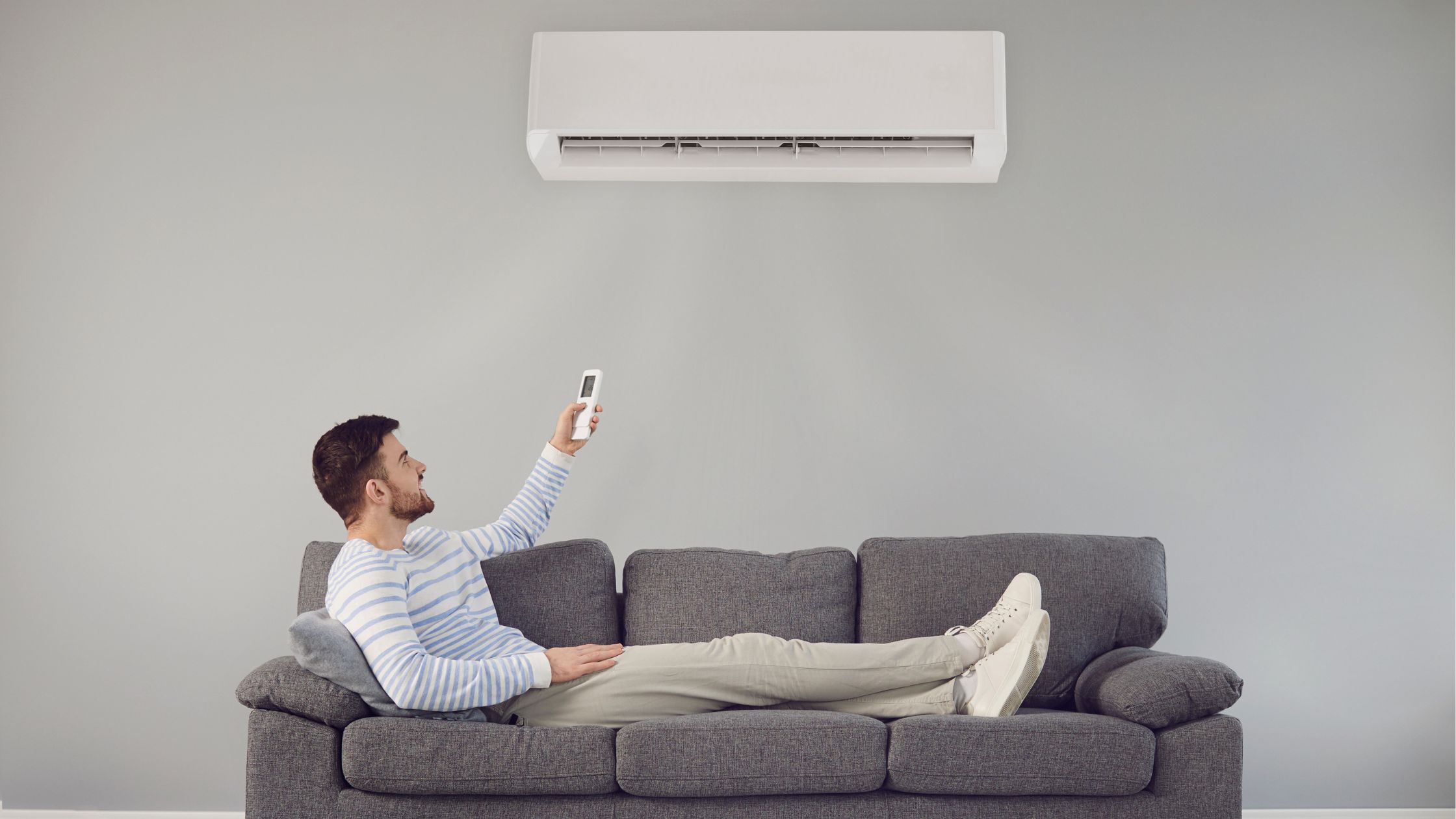
A mono-split consists of two units: an indoor unit (wall-mounted, ceiling-mounted, or floor console) and an outdoor unit (the condenser to be installed on the facade, balcony, or rooftop). It cools a single room.
Advantages: high performance, quiet indoors (25–35 dB), good value for money. It is the most common solution for cooling a living room or master bedroom.
Limitations: covers only one room. To cool multiple rooms, you need either several mono-splits (as many outdoor units) or a multi-split system.
Multi-Split
A single outdoor unit powers multiple indoor units (typically 2 to 5). Each room has its own temperature control.
Advantages: only one outdoor unit for the entire apartment — easier to get approved by the co-ownership. Comfort in all rooms without multiplying facade equipment.
Limitations: more complex installation (piping between each indoor unit and the outdoor unit), more expensive, and requires access for refrigerant lines (false ceiling, boxing, service duct).
Portable Air Conditioner
A single unit on wheels, plugged into a standard socket. Hot air is exhausted through a flexible hose to the outside (through a partially open window or a wall vent).
Advantages: no fixed installation, no authorisation, movable from room to room.
Limitations: noisy (55–65 dB, comparable to a lively conversation), low performance (low COP), and the exhaust hose requires leaving the window ajar — which lets hot air in and reduces effectiveness. An emergency solution, not lasting comfort.
Reversible Air Conditioning (Air-to-Air Heat Pump)
A split (mono or multi) capable of cooling in summer and heating in winter. Technically, it is an air-to-air heat pump that reverses its cycle depending on the season.
Advantages: a single piece of equipment for both seasons — cost-effective if you also need supplementary heating. Energy performance superior to a standard electric radiator (COP of 3 to 4: for every 1 kWh consumed, the unit produces 3 to 4 kWh of heat).
Limitations: in heating mode, performance drops when the outdoor temperature falls below 0 °C. In Paris, severe cold spells are rare but do occur — do not rely on it as the primary heating system in the depths of winter.
Proper Sizing: Area, Orientation, Insulation
An incorrectly sized air conditioner is either insufficient (it runs constantly without reaching the set point) or oversized (short cycles, premature wear, overconsumption).
Factors to consider:
– Room area: the basis for calculation. Rule of thumb: 100 to 130 W of cooling capacity per m² for a standard Parisian apartment
– Orientation: a south or west-facing room requires 20–30% more capacity compared to a north-facing room
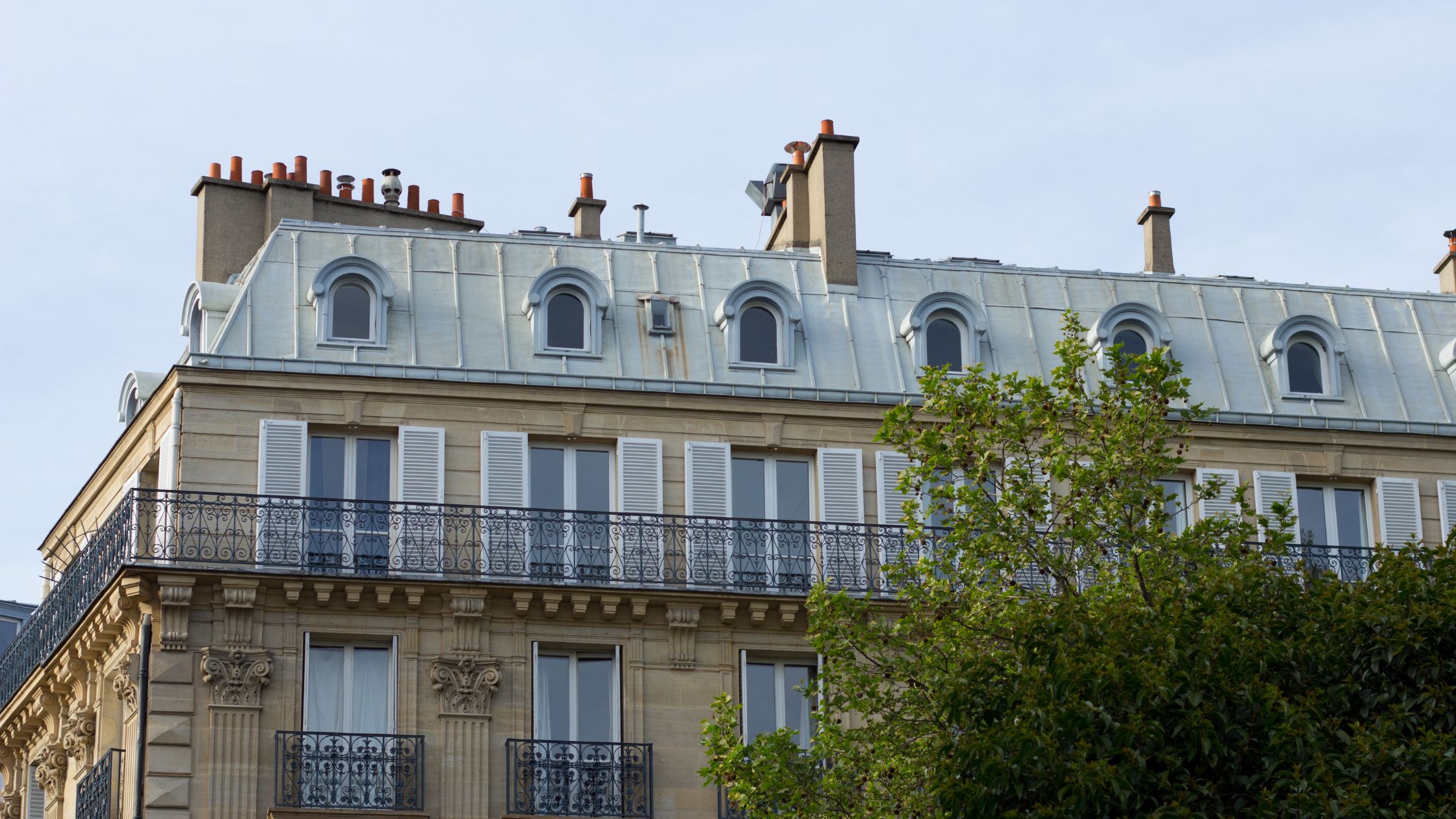
– Floor level: top floor under roofing = 15–25% increase (zinc roofing, radiant heat)
– Insulation: single glazing, uninsulated walls = significant increase. A well-insulated apartment (double glazing, insulated attic) requires less capacity
– Ceiling height: Haussmannian apartments (2.80–3.20 m) have 15–30% more air volume than a standard home — factor this into the sizing
A qualified professional carries out a thermal assessment before providing a quote. Be wary of quotes produced "by estimation" without a site visit.
Apartment Constraints
The Outdoor Unit
This is often the sticking point. The outdoor unit (compressor + fan) must be installed somewhere: balcony, facade, rooftop, or plant room.
In a Parisian co-ownership:
– Facade installation requires general assembly approval (modification of the exterior appearance)
– In protected areas (Le Marais, ABF perimeter), the Architecte des Bâtiments de France may refuse
– The balcony or interior courtyard is often the simplest solution — but noise can disturb neighbours
– Some buildings have a rooftop plant room: the least visible solution
Condensate Drainage
Air conditioning produces water (condensation from air humidity). This water must be drained: to an existing rainwater downpipe, a drainage network, or a condensate pump. Failing to plan for condensate drainage guarantees water leaks in your home or your downstairs neighbour's.
Refrigerant Lines
The copper pipes connecting the indoor unit to the outdoor unit must run somewhere: exposed (in boxing), in a false ceiling, or in an existing service duct. The typical maximum distance is 15–25 metres depending on the model. The longer the line, the more performance decreases.
Selection Criteria: Noise, Energy Rating, Maintenance
| Criterion | What to check |
|---|---|
| Indoor noise | 20–30 dB = near-silent (bedroom). 35–45 dB = noticeable (living room). Check the night-mode value |
| Outdoor noise | 45–55 dB = normal conversation level. Check neighbourhood noise regulations (maximum emergence) |
| Energy rating | SEER (cooling) and SCOP (heating): aim for A++ minimum. An A+++ unit consumes 30–40% less than a B-rated one |
| Filtration | Standard dust filter included. Antibacterial and anti-allergen filters optional on some models |
| Maintenance | Clean filters every 2–4 weeks (owner). Annual professional servicing recommended. Mandatory refrigerant check above certain charge thresholds |
| Warranty | 2-year statutory minimum. Some manufacturers offer 5 years on the compressor. Warranty does not cover lack of maintenance |
Using a Certified Professional
The installation of air conditioning involving refrigerant handling is regulated. Only an installer holding a valid refrigerant handling certificate can legally carry out the work.
Checks before signing:
– Valid refrigerant handling certificate
– RGE qualification (Recognised Environmental Guarantor) if you wish to access financial incentives (MaPrimeRénov', CEE)
– Ten-year insurance covering air conditioning works
– Detailed quote (equipment, labour, commissioning, condensate drainage, any boxing)
Réseau Tubulure is RGE-qualified and operates throughout Paris for apartment air conditioning installation. Contact us for a free thermal assessment and detailed quote.
Frequently Asked Questions
What capacity for a 25 m² room?
For a standard Parisian apartment (double glazing, intermediate floor), expect approximately 2,500 to 3,000 W of cooling capacity for 25 m². If the room is on the top floor under roofing or has single glazing, plan for 3,500 to 4,000 W. A precise thermal assessment remains essential for reliable sizing.
Split or portable for a studio?
If you are the owner or if your lease and co-ownership allow it: a mono-split is incomparably more effective, quieter, and more economical to run. If you are a tenant with no possibility of installing an outdoor unit: the portable air conditioner is your only option, but expect significant noise and limited effectiveness.
Is an outdoor unit always required?
For a split (mono or multi), yes — it is the component that rejects heat outside. There is no split without an outdoor unit. The "air conditioners without outdoor unit" on the market are actually monobloc systems recessed into the facade (wall penetration), which remain less effective than a standard split but avoid the bulk of a unit on the balcony. They still require an opening in the facade.
Contact Réseau Tubulure
Need a plumber or air conditioning specialist in Paris? Réseau Tubulure responds quickly throughout Paris and Île-de-France.