

Heatwave in Paris: How to Keep Your Apartment Cool

Parisian summers are getting hotter. According to the IPCC and Météo-France, heatwaves could double in frequency by 2050. Before considering air conditioning installation, several simple steps can maintain a bearable temperature in a Parisian apartment — often with surprising results. Here is everything you need to know to get through the next heatwave episodes without suffering.
Why Do Parisian Apartments Overheat?
Paris has several aggravating factors. Built-up density creates an urban heat island effect: mineral surfaces (asphalt, stone, concrete) absorb the sun's heat throughout the day and release it at night, preventing temperatures from naturally dropping. The result: Parisian nights can stay at 25–27 °C, with no cooling at all.
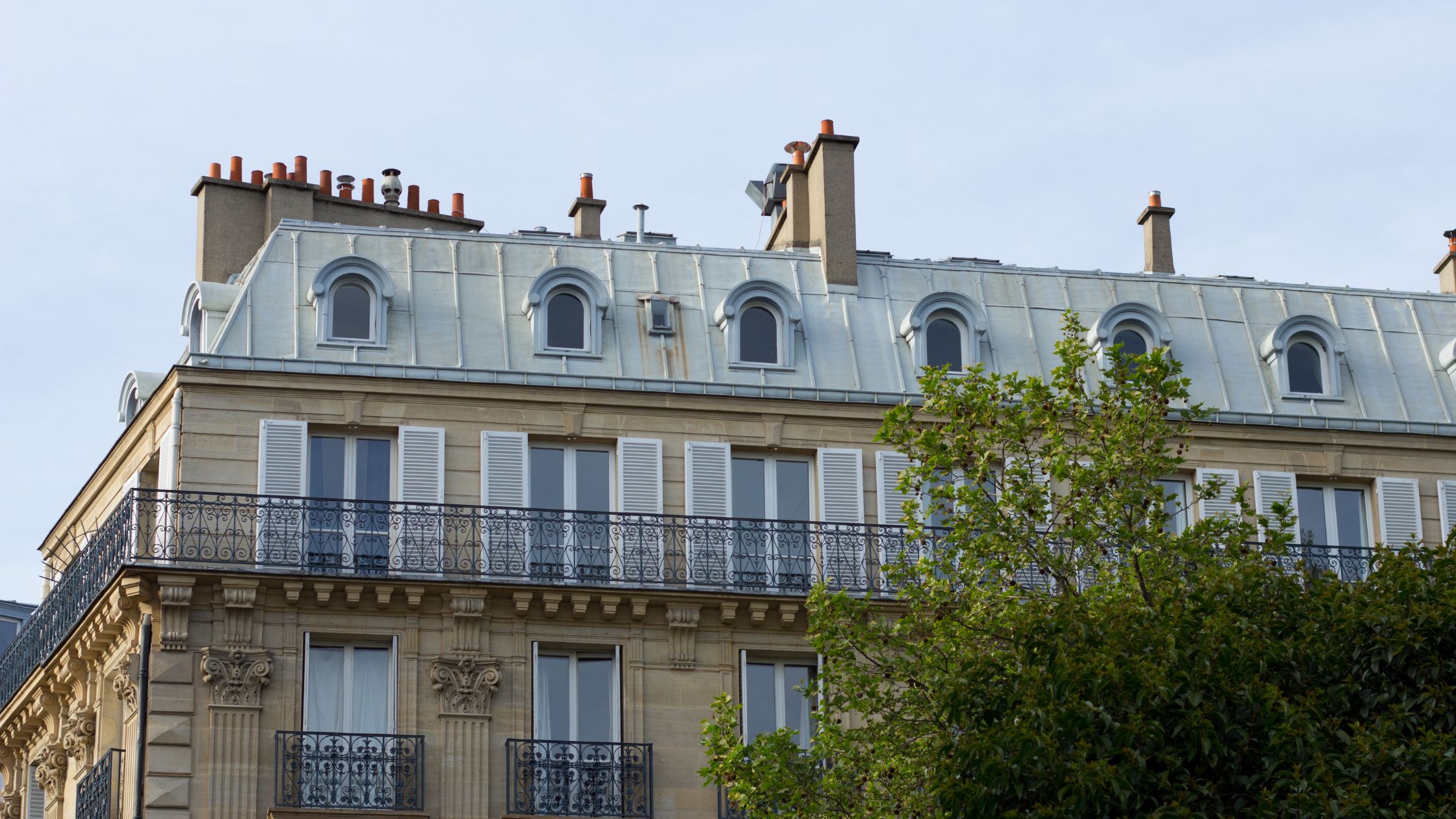
Inside, Haussmannian apartments — with their large windows often facing due south — accumulate heat throughout the day. On the top floor or under the rooftops, the situation is even more critical: the roof directly heats the living space below.
The Thermal Mass Effect of Historic Buildings
The thick limestone walls of Parisian buildings act as a "thermal flywheel": they take a long time to heat up… but also a long time to cool down. If the heat persists for several days, the building fabric itself becomes a source of radiant heat. This is why it is crucial to act from the very start of a heatwave — before the walls become saturated.
Keeping Heat Out During the Day
The golden rule: block the sun before it enters the room. A window exposed to direct sunlight turns a living room into a greenhouse in less than an hour.
Priority actions:
– Close shutters and blinds as soon as the sun hits the window (around 9 AM on the east side, 11 AM on the south, 2 PM on the west)
– Use north-facing rooms for working or resting during the day — they naturally stay 4 to 6 °C cooler
– Draw heavy curtains or fabric blinds over windows without shutters
– Delay the use of heat-generating appliances to the evening or night: oven, tumble dryer, dishwasher
Windows: Weak Point Number One
Single glazing, still common in older Parisian buildings, lets through roughly twice as much radiant heat as low-emissivity double glazing. If you haven't replaced your windows yet, a solar film applied to the existing glass can reduce solar gain by 30 to 50% — provided you choose a reflective film (on the sun side) rather than an absorbing one.
Circulating Air at Night
Night air is your best ally. When the outside temperature drops in the evening, it is possible to purge the heat accumulated in the walls and furniture.
– Open wide as soon as the outside temperature falls below the inside temperature (often between 9 PM and 11 PM)
– Create a cross-draft: open two opposite windows simultaneously (street side + courtyard, or east + west)
– Use a fan pointed at an open window to actively push hot air outside
– Close everything the next morning, shutters included, before the outside air heats up — usually before 9–10 AM
Single-Aspect Apartments: A Special Case
If all your windows face the same direction — a common situation in small Parisian apartments — cross-ventilation is impossible. Solution: leave the front door slightly ajar (if there is a common hallway) or place a fan in front of the window to force circulation, even in one direction only.
Reducing Internal Heat Sources
During a heatwave, electrical appliances contribute significantly to indoor discomfort:
– Refrigerator: the compressor at the back radiates heat — ensure there is clear space around it
– Oven: avoid during the day; prefer a microwave, low-power induction hob, or cold meals
– Lighting: incandescent bulbs convert 90% of their energy into heat; switch to LED if you haven't already
– Standby appliances: chargers, internet box, television — unplugged, they no longer heat unnecessarily
When Air Conditioning Becomes Necessary
For most healthy adults, passive measures are sufficient during moderate heatwaves. However, some situations warrant going further:
– Elderly people (over 65), infants, people with cardiovascular or respiratory conditions
– Apartments with no possibility of cross-ventilation, facing due south, on the top floor
– "Tropical" nights (temperature not dropping below 20 °C) over several consecutive nights — an increasingly common phenomenon in Paris according to Météo-France
– People working from home who need to maintain concentration throughout the day
In these situations, a reversible air conditioning system can lower the temperature in a controlled way. According to ADEME, setting your air conditioning to 26 °C instead of 22 °C cuts electricity consumption in half — an essential benchmark for keeping energy bills in check.
For apartments where installing an outdoor unit is not feasible (co-ownership refusal, conservation area), alternative solutions exist and are worth exploring with a professional.
Réseau Tubulure assesses your situation and advises you on the right solution for your apartment — from simple preventive measures to air conditioning installation. Contact us for a free quote.
Frequently Asked Questions
Should I open or close the windows during the day?
During the day, when the outside temperature is higher than the inside temperature, you should close the windows — shutters included. Opening them would only let hot air in. Wait until the outside temperature drops below the inside temperature, usually in the early evening (between 9 PM and 11 PM), to ventilate extensively.
Is a fan enough during a heatwave?
A fan does not cool the air: it creates an airflow that speeds up the evaporation of sweat on the skin, which provides a sensation of coolness. This effect is real up to about 35–37 °C. Beyond that, if the air being moved is hotter than body temperature, the fan can become counterproductive. However, it remains very useful at night for evacuating heat accumulated in the home.
At what temperature does heat become dangerous?
The risk of heatstroke appears during prolonged exposure to temperatures above 35 °C, combined with high humidity (above 60%). Nights without cooling (above 20 °C) are particularly dangerous because the body cannot recover. Elderly people, infants, and people on certain medications are the most vulnerable — for them, having access to a cooled space is not a comfort but a medical necessity.
Contact Réseau Tubulure
Need a plumber or air conditioning specialist in Paris? Réseau Tubulure responds quickly throughout Paris and Île-de-France.