

Why Your Bathroom Smells Like Sewage — and How to Fix It

Why Your Bathroom Smells Like Sewage — and How to Fix It
You walk into your bathroom and you’re greeted by a smell that distinctly resembles a sewer. It’s unpleasant, and often hard to pin down: the smell comes and goes, sometimes only in the morning, sometimes only when you use the shower or toilet. It disappears, then comes back.
The good news: in the vast majority of cases, this smell has a simple, identifiable cause that can be fixed without major work. Here are the 6 most common causes — and the concrete solutions for each.
Understanding the Role of the Trap
Before identifying the cause, it helps to understand why sewer smells rise into your bathroom. The system is simple: every drain (shower, basin, toilet) is fitted with a trap — a U-shaped bend that retains a permanent column of water. This water column acts as a seal between your bathroom and the drainage pipes, blocking the gases and smells from the sewer system.
When this water barrier disappears or is bypassed, smells pass through freely. This is why almost all bathroom smell problems come down to a trap issue — dried out, poorly positioned, damaged, or bypassed by a pressure phenomenon in the pipes.
Cause 1 — A Dried-Out Trap (The Most Common)
By far the most common cause. If you don’t use a basin, shower or bath for several weeks, the water in the trap gradually evaporates and eventually disappears completely. Without this water barrier, sewer gases rise freely.
This often happens in rarely used secondary bathrooms, in apartments left empty during holidays, or in guest toilets that are seldom flushed.
The fix: simply pour 1 to 2 litres of water down the dried-out drain — into the shower drain, the basin plug hole, or the rarely used toilet bowl. The smell disappears within minutes. To prevent recurrence, run water briefly through all drains once a week, even if you’re not using them.
Cause 2 — A Blocked or Partially Clogged Trap
When the drain in your shower or basin is partially obstructed by an accumulation of hair, soap and limescale, water drains slowly but the inside of the trap becomes a breeding ground for anaerobic bacteria. These bacteria produce hydrogen sulphide — the gas responsible for the rotten egg smell characteristic of sewers.
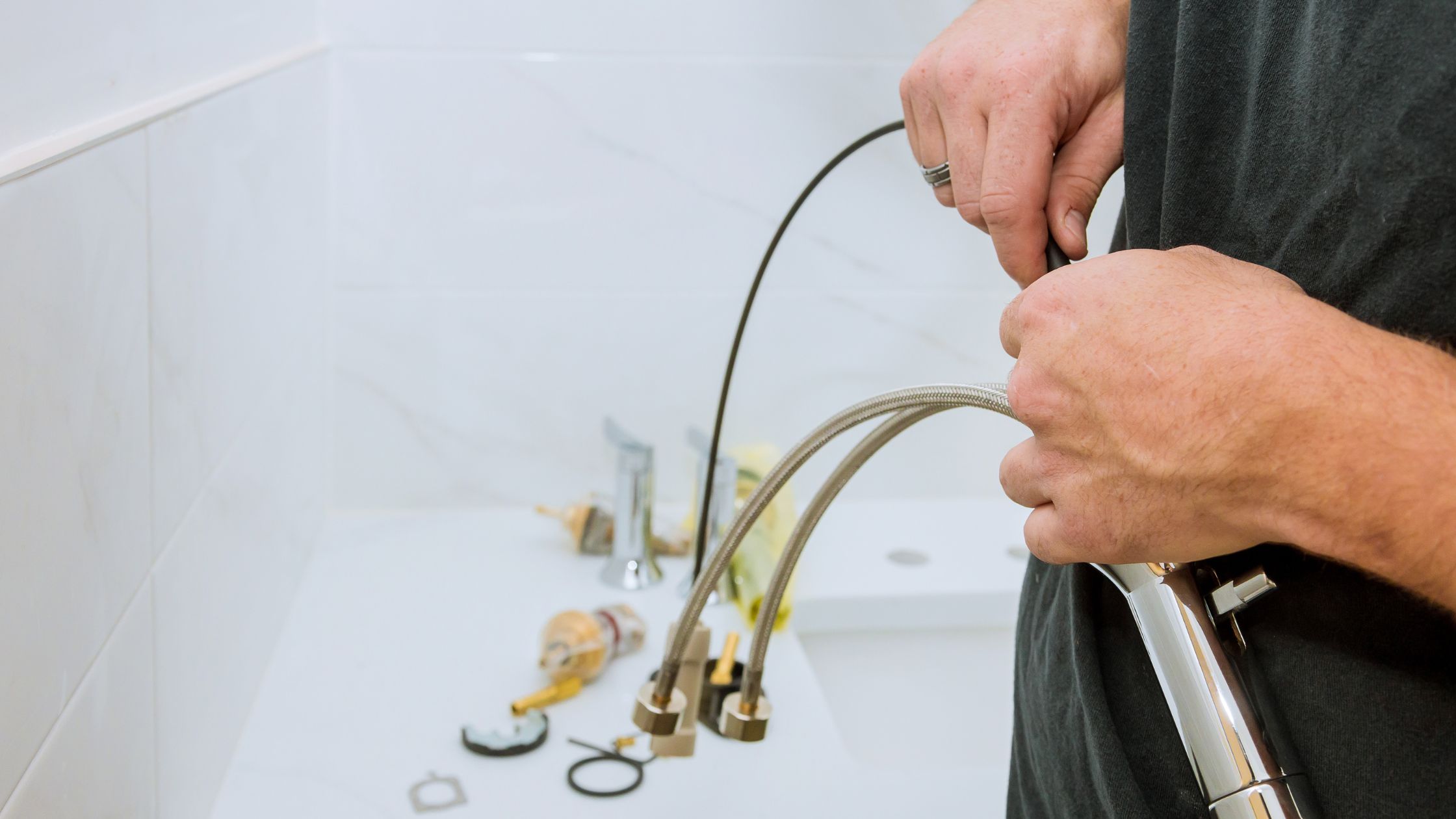
The fix: clean the trap. Unscrew it (place a bucket underneath first), empty the contents, scrub the inside with a brush, and reassemble. Follow up with a baking soda and white vinegar treatment to eliminate the bacterial biofilm. If the smell persists after cleaning, the trap may be at the end of its life and needs replacing.
Cause 3 — Worn or Missing Trap Seals
Even if the trap is full of water, if its seals are worn, cracked or missing, micro air leaks allow smells to seep into the room. This problem is more common with older traps (over 10 years old) or cheap plastic traps that warp over time with heat and use.
The fix: visually check the seals by unscrewing the trap. A worn seal will be flattened, hardened or cracked. Replace the seals (a few pence at any hardware store) or replace the entire trap if the whole unit is aging. Replacing a trap costs under €15 in parts.
Cause 4 — Negative Pressure in the Pipes (Siphon Effect)
This one is less well-known but common in older buildings. When a neighbour uses the toilet or shower on another floor, or when a cistern is flushed elsewhere in the building, a pressure wave travels through the drainage stack. If the pipes are not properly vented (via a vent stack), this pressure wave can suck the water out of your bathroom trap — a phenomenon called siphoning or trap depletion.
You recognise it by one telltale sign: gurgling sounds in your drains just after someone in the building flushes their toilet or turns on a tap.
Cause 5 — A Faulty Toilet Pan Seal or Flange
If the smell comes specifically from the toilet — even just after flushing — the problem may be the toilet pan seal or the flange that fixes the toilet to the floor. This sealing ring (a wax ring or foam seal) can crack over time, deform if the toilet has been slightly shifted, or be absent if the toilet was poorly installed.
Without this seal, the interface between the toilet pan and the floor connection is not airtight. Drainage smells pass directly into the room, often intermittently depending on pressure in the pipes.
The fix: this replacement requires removing the toilet, replacing the flange seal, and refitting everything. It’s a simple job for a plumber (1 hour maximum), but tricky to do alone as incorrect positioning of the toilet can recreate the problem quickly.
Cause 6 — A Deep Blockage in the Pipes
If the sewer smell is strong, persistent, and accompanied by slow drainage from multiple fixtures at once, the problem is no longer at trap level — it’s in the drainage pipes themselves. A partial deep blockage creates zones where wastewater stagnates, ferments, and emits noxious gases.
This type of problem is common in older Parisian buildings with aging cast-iron or stoneware drainage pipes, and worsens over time if left untreated.
Quick Diagnosis: Where Is the Smell Coming From?
To quickly identify the source, follow these steps in order:
- Pour water down all drains (shower, basin, bidet, floor drain). Wait 5 minutes. Smell gone? → Dried-out trap. Cause 1 solved.
- If the smell persists, clean the basin and shower traps. Smell directly into the drain opening. Smell coming from there? → Dirty trap. Cause 2.
- Check whether the trap seals are visibly worn. → If yes, Cause 3.
- Is the smell coming specifically from the toilet (especially in the morning)? Does the toilet rock slightly when you sit on it? → Probable Cause 5. Call a plumber.
- Is the smell strong, persistent and are multiple drains running slowly? → Cause 6. Call a plumber.
- Do you hear gurgling when a neighbour flushes? → Cause 4. Call a plumber for an air admittance valve.
Products to Avoid
When faced with smells, the reflex is often to pour a chemical product down the drains. A few warnings:
- Scented “drain freshener” products mask the smell but don’t treat the cause — and can damage seals
- Neat bleach poured in large quantities can kill bacteria in a dirty trap, but also attacks seals and PVC traps
- Acid descalers (strong toilet cleaners) should never be used in basin or shower traps — they are formulated for porcelain, not plastic
The best approach remains mechanical: physically clean the trap, check the seals, treat with baking soda and white vinegar.
When to Call a Plumber
Most causes of bathroom sewer smells can be fixed without a professional. But in these situations, don’t delay calling:
- The smell is strong and persistent despite DIY solutions
- Drainage is slow from multiple fixtures at once
- You hear gurgling when neighbours use their plumbing
- The toilet rocks or its floor connection is visibly defective
- A gas smell accompanies the sewer smell (in this case, ventilate immediately and call the gas emergency service)
Contact us for a fast, free quote.