

Water Meter Spinning With Everything Off: Is It a Hidden Leak?

You've just checked your water meter. The numbers are advancing. But you haven't opened a single tap, the washing machine is off, and the toilets haven't been flushed.
That's a worrying sign. And it's often the first indication of a hidden leak — a leak you can't see, but which is flowing somewhere in your home.
Here's how to confirm the diagnosis, understand what you're seeing, and decide what to do.
The meter test: full instructions
- Step 1 — Close everything. Taps, shower, toilets, washing machine, dishwasher, garden tap, water softener. Everything.
- Step 2 — Read the meter. Write down all the digits shown on your meter, including any decimals.
- Step 3 — Wait 30 minutes. Without using any water. An hour is better for slow leaks.
- Step 4 — Read the meter again. Compare with your first reading.
Result:
- The reading hasn't moved: no active leak at this moment. If you still suspect a problem, repeat the test at night (less variation due to network pressure).
- The reading has moved: you have a leak. 1 litre in 30 minutes is a slow but real leak; 10 litres in 30 minutes is significant.
My meter has a small dial or needle — how do I read it?
Older meters often have a small dial or needle that turns even for very low flow rates. If this needle is moving even slightly while everything is closed — you have a leak. Modern meters (Téléo, Itron) have an indicator light or digital display that serves the same function.
Is the leak inside your flat or in the building's pipes?
Test with the main stopcock
Every apartment has a main stopcock (robinet d'arrêt général) — usually under the kitchen sink. Close it completely.
- The meter stops: the leak is inside your apartment. It's your responsibility.
- The meter keeps turning: the leak is upstream of your stopcock — in the building's shared pipes or the connection. Contact your building manager (syndic) immediately.
Where could a hidden leak be hiding?
Toilets — the most common cause of a hidden leak
A continuously running toilet is the most common invisible leak. Water flows silently from the cistern into the bowl — up to 500 litres per day, with no sound.
Simple test: put a few drops of food colouring in the cistern. Wait 10 minutes without flushing. If the colour appears in the bowl, your toilet is leaking.
Taps and flexible hoses
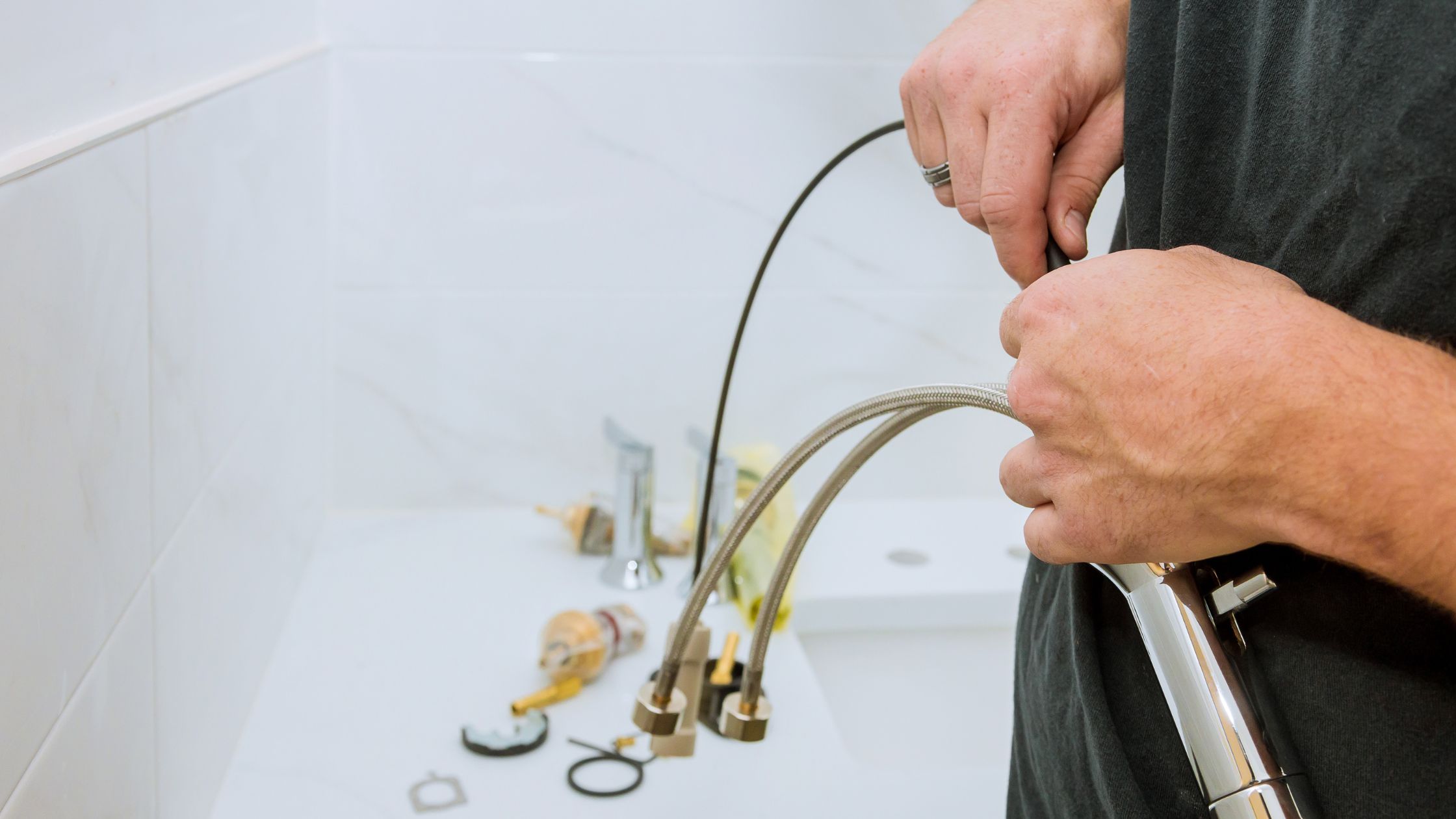
A slowly dripping tap wastes around 30 litres a day. Also check the flexible hoses under sinks and behind toilets — they can crack without being visible.
Concealed pipes
This is the most difficult case. The leak is inside a wall, under a slab or behind a piece of furniture. The meter test confirms the leak but doesn't locate it. You need a professional detection intervention to find the source without breaking everything open.
When to call a plumber
Call immediately if:
- The meter is running and you can't find any dripping tap or running toilet — the leak is concealed
- You notice a damp patch on a wall or ceiling
- The floor tiles feel abnormally warm or cold in one spot
- Your water bill has increased significantly for no clear reason
- The meter test shows more than 3 litres lost in 30 minutes
You can wait if:
- A tap is dripping slightly and you can replace it yourself
- A toilet seal is worn and you know how to replace it
What Réseau Tubulure does
Once the meter test confirms a concealed leak, our technicians use non-destructive detection equipment: acoustic sensors, thermal cameras, tracer gas.
We locate the source to within a few centimetres without opening the wall at random. And in most cases, the detection costs are fully reimbursed by your home insurance. Read our guide on insurance reimbursement for leak detection.
Key takeaways
- A meter spinning with everything off = active leak, usually hidden
- Close the main stopcock to find out if the leak is in your flat or in the building
- Toilets are the most common cause of a hidden leak — test with food colouring
- If you can't find the source, the leak is probably concealed — call a professional
- Detection costs are covered 100% by home insurance in most cases