

Leaking Shower Tray: The Most Common Source of Invisible Leaks in Paris

You have a damp patch in the hallway. Or on your downstairs neighbour's ceiling. Or floorboards buckling near the bathroom.
You look for the cause. You check the visible taps, the exposed pipes, the apparent seals. Everything looks fine.
And yet the leak is there. It has been running for weeks. Sometimes months.
In the vast majority of cases we handle in Paris, the culprit is the shower tray. It is by far the most common source of invisible leaks in Parisian apartments.
Here's why, how to detect it, and how to fix it.
Why is the shower tray so often to blame?
A shower tray is subject to significant stress: thermal cycling (hot and cold with every use), the user's weight, vibration from the drainage, and the expansion and contraction of materials with changing seasons.
Over time, several types of failure can develop.
Degraded peripheral seal
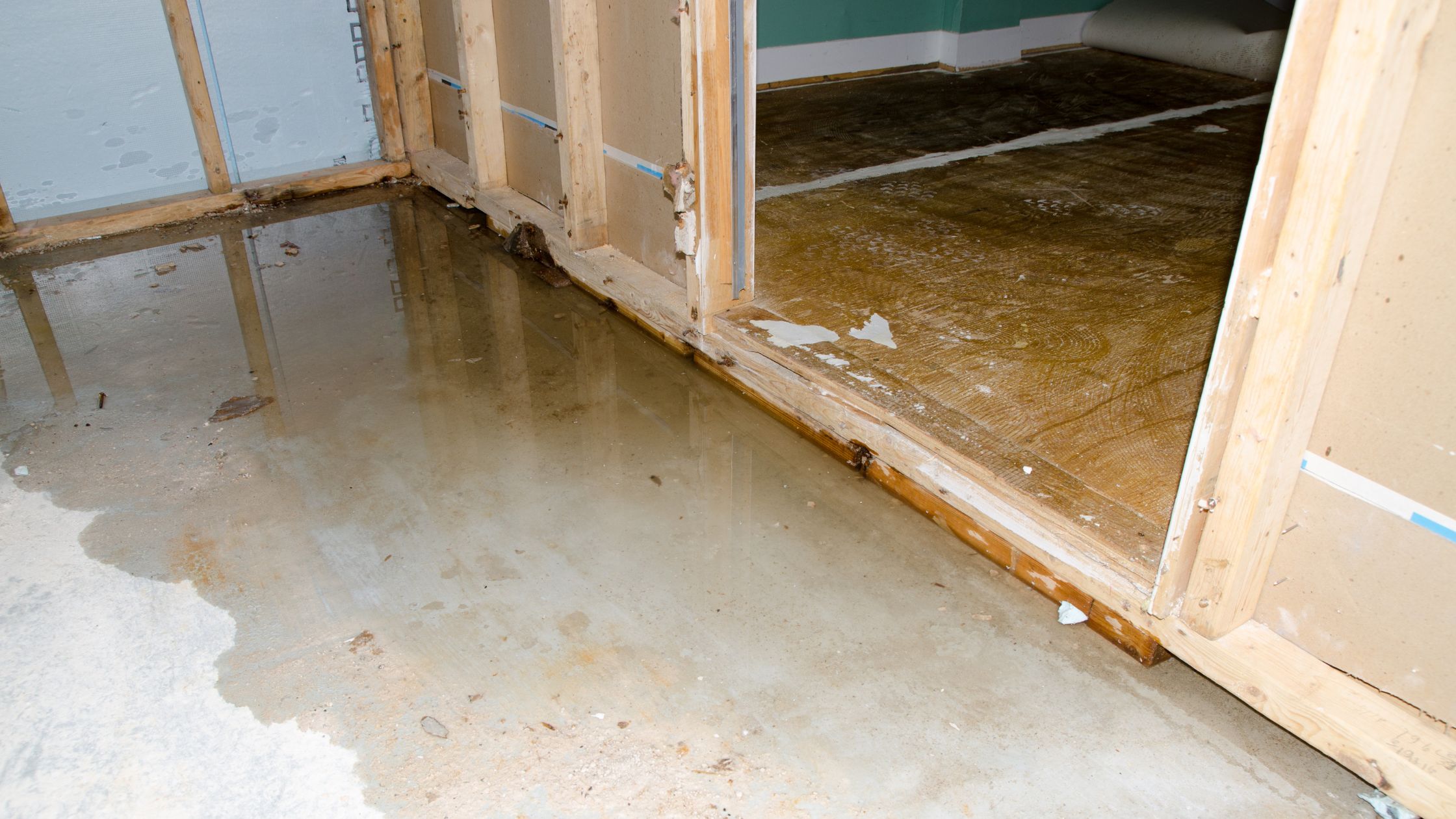
This is the most common case. The silicone seal connecting the tray to the shower walls cracks, peels away, or gradually disappears. With each shower, a small amount of water infiltrates through this microscopic crack. It slowly flows under the tray, saturates the screed, and migrates into adjacent partitions.
The problem: it's invisible. The crack is fine, often partially masked by limescale or mould. The water doesn't reappear immediately — it travels several metres before showing up as a stain.
Cracked tray
Resin, acrylic, or ceramic trays can crack under stress or from an impact. A crack in the tray surface, even a fine one, allows water to pass directly underneath. This type of leak can flow with every use without anything being visible on the surface.
Bending or deformation of the tray
Surface-mounted trays (not recessed) rest on feet or a supporting structure. If this structure settles or deforms over time, the tray bends slightly. This bending creates a gap between the tray and its peripheral support — water flows in with every use.
This defect is particularly insidious because the tray looks intact and the seal looks fine. The leak is invisible until the tray is lifted.
Missing or failed under-tray waterproofing
In older or poorly installed systems, the waterproof membrane under the tray (SPEC membrane or equivalent) may be absent or degraded. Water passing through the drain or around the edges finds no barrier and infiltrates directly into the structure.
Why does it stay invisible for so long?
Water rarely takes a direct path. A peripheral leak on a shower tray on the second floor can take several weeks to appear as a stain on the first-floor ceiling.
During all that time, water travels through the screed, saturates plasterboard partitions, oxidises metal frameworks, and encourages mould growth behind surface coverings.
By the time the stain appears, the damage is already significant. This time lag between the leak and its visible symptoms explains why the shower tray is not immediately suspected. Occupants often look for a leak on a visible pipe — when the source is actually the tray.
How to detect a shower tray leak without demolishing everything
Hygrometer first
The technician starts by taking moisture readings in the partitions adjacent to the shower. Abnormally high rates — 40%, 60%, even 99% in saturated materials — confirm an active infiltration in this area. The location of the highest moisture points guides towards the source.
Thermal camera to localise the anomaly
The infrared camera scans the tray and its surroundings. A cold zone localised under the tray or at its periphery indicates the presence of water. On an underfloor heating system, the anomaly is even clearer — the cold zone contrasts sharply with the uniform warmth of the rest of the surface.
Tracer liquid for definitive proof
This is the key step for shower trays. The technician pours a coloured liquid (red, orange, or fluorescent green) directly onto the tray and observes. If the leak comes from the peripheral seal, the dye follows the water and reappears at the base of the partition, under the tray, or on the ceiling below.
The result is visible and photographable — irrefutable evidence for the insurance report.
Targeted opening if necessary
When the tracer test confirms a leak under the tray or in the structure, a targeted opening may be needed to confirm the condition of the materials and access the waterproofing layer. The technician only opens where the investigation has pointed — not across the entire floor.
What to do once the shower tray is confirmed as the source
Once the source is confirmed, the repair must address the cause — not just the symptoms.
Recommended repairs by diagnosis type:
- Degraded peripheral seal: complete seal replacement (remove old seal, clean, reapply with appropriate sanitary silicone) — coupled with a check of the tray's planarity
- Cracked tray: remove and replace the tray — a repair on a crack in an active shower tray won't hold long term
- Bending / deformation: remove tray, verify and correct the supporting structure, reinstall with an access hatch for future inspection
- Missing waterproofing: full removal, install under-tray waterproof membrane (SPEC or equivalent), reinstall
In all cases, reinstatement of degraded materials (plasterboard, insulation, finishes) must be carried out after full drying. Technical drying equipment may be needed depending on the extent of the damage.
Insurance coverage for a shower tray leak
A shower tray leak is generally covered by your home insurance water damage guarantee (garantie dégâts des eaux). It corresponds to accidental, localised infiltration caused by a sanitary equipment failure — which is exactly the scope of this guarantee.
The condition: a technical report clearly identifying the source, documenting the damage, and establishing the causal link. Réseau Tubulure writes this report as standard and handles the insurance claim for you.
For the full procedure and pricing: insurance reimbursement for leak detection in Paris.
Key takeaways
- The shower tray is the most common source of invisible leaks in Parisian apartments
- The leak can run for weeks before appearing as a stain — the time lag is normal
- Main causes: degraded peripheral seal, cracked tray, bending, missing waterproofing
- Hygrometer + thermal camera + tracer liquid detect it without demolition
- The repair must fix the cause — not just patch the visible seal
- Insurance coverage is available with a complete technical report