


Emergency Heating Engineer: How to React in the Event of a Heating Failure
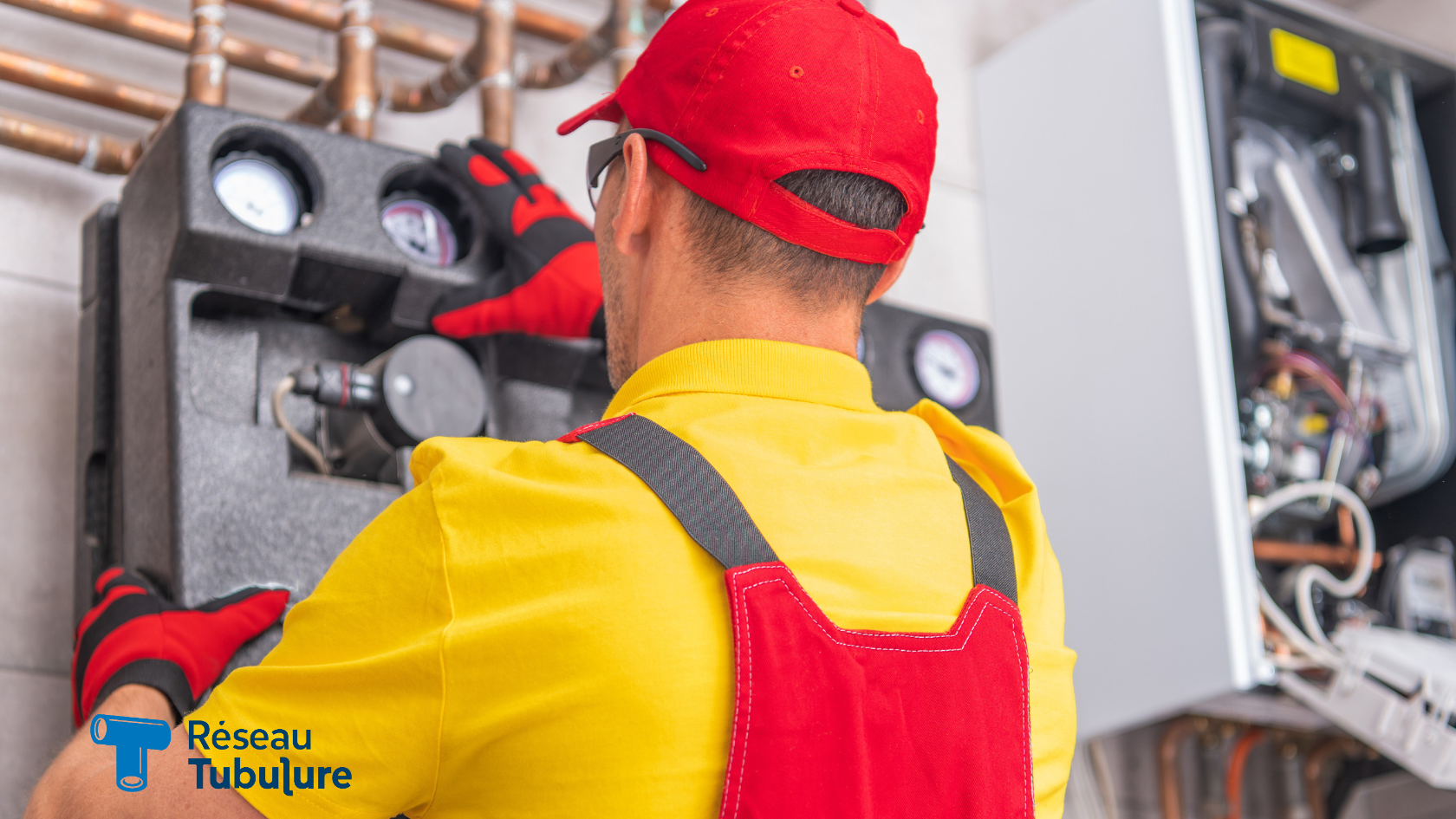
Does your heating break down in the middle of winter? Is the temperature in the house dropping rapidly and you don't know what to do? This guide explains how to diagnose a failure, what immediate actions to take, and when to call a heating engineer urgently. Concrete solutions to avoid staying in the cold.
Heating emergency now? Contact us at [NUMERO] - Fast intervention in Paris and the inner suburbs
Quick Diagnosis: Why Is Your Heating No Longer Working?
Total outage (no more heat)
Symptoms: the boiler is off, the radiators are cold everywhere, no operating noise.
Common causes:
- Electrical failure (circuit breaker, fuse)
- Water pressure too low (gas boilers)
- Thermostat problem
- Safe boiler (anomaly detection)
- Pilot light failure (old gas boilers)
Emergency: high in winter (temperature < 10°C outside). You have a maximum of 24-48 hours before the accommodation becomes uninhabitable.
Partial failure (Insufficient heating)
Symptoms: the boiler is working but some radiators stay cold, or all radiators are lukewarm instead of hot.
Common causes:
- Air in the radiators
- Mud in the circuit (old radiators)
- Faulty circulator
- Thermostatic valve blocked
- Insufficient boiler power (undersizing)
Emergency: average. Partially heated housing, but discomfort and overconsumption.
Heating that Stops and Starts Again and Again
Symptoms: the boiler starts up, heats up 5-10 minutes, stops, starts again, stops...
Common causes:
- Incorrectly adjusted or misplaced thermostat
- Unstable water pressure
- Clogged circulator
- Faulty temperature probe
Emergency: medium to high depending on the outside temperature. The boiler often ends up being permanently safe.
Immediate Actions Before You Call
Verification 1 - Power Supply
What you need to do:
- Check your electrical panel
- Look for the circuit breaker dedicated to the boiler (usually labeled “boiler” or “heating”)
- If it is in the lower position, raise it up
- If the boiler starts up again, watch for 1 hour
- If the circuit breaker resists immediately, DO NOT INSIST: dangerous short circuit
Why does it sometimes work: a punctual overvoltage (storm, EDF outage) can cause the circuit breaker to blow up without the boiler failing.
Verification 2 - Water Pressure (Gas Boilers)
What you need to do:
- Look at the pressure gauge on the boiler (dial with needle or digital display)
- The pressure must be between 1 and 1.5 bar (green zone generally)
- If < 0.8 bar (red zone), the boiler goes into safety
- Add water via the fill valve (under the boiler, looks like a small faucet or valve)
- Open slowly until 1.2 bar is reached
- Close the refill valve completely
- Start the boiler again (reset button)
ATTENTION: if the pressure drops regularly (every week), you have a leak in the circuit. Heating engineer call mandatory.
Check 3 - Thermostat
What you need to do:
- Check that the thermostat is set to a temperature higher than the room temperature
- If the thermostat is programmable, check that it is not in “absence” or “night” mode
- Change the batteries if the thermostat is wireless (low batteries = communication loss)
- Temporarily increase the setpoint by 5°C to force the heating request
Why does it sometimes work: 30% of heating “failures” are actually thermostat adjustment errors or weak batteries.
Check 4 - Draining the Radiators
If some radiators are cold:
- Open the drain (small screw at the top of the radiator) with a drain wrench
- Let the air out until the water flows
- Close immediately
- Repeat for each cold radiator
- Check the boiler pressure afterwards (may have dropped) and adjust if necessary
Recommended frequency: Once a year at the beginning of the cold season (October/November).
Check 5 - Reset button
If the boiler shows an error code:
- Note the error code displayed (ex: E03, F28, etc.)
- Press the “reset” or “reset” button (usually red or orange)
- The boiler is trying to restart
- If it restarts and works normally for 2-3 hours, one-time problem solved
- If it gets back into error immediately or after 30 minutes, failure confirmed
Error code = diagnosis: Keep this code, it will help the heating engineer identify the fault quickly.
When to Call a Heating Engineer Urgently?
Absolute Emergency Situations
Smell of gas
- Open ALL windows immediately
- Do not turn on ANYTHING (no lights, no phones in the room)
- Close the gas meter
- Get out of the house
- Call GRDF (24-hour emergency number): 0 800 47 33 33
- Then call a certified gas heating engineer
Carbon monoxide (CO) leak
- Symptoms: headache, nausea, dizziness in all occupants
- Open windows
- Get out immediately
- Call firemen (18) or SAMU (15)
- Do not use the boiler again before professional inspection
Major boiler water leak
- Switch off the water supply to the boiler
- Turn off the boiler's electricity
- Place containers under the leak
- Call the heating engineer urgently (risk of water damage)
Situations Requiring Rapid Response (24-48h)
Outside temperature < 5°C In the middle of winter in Paris, no heating = uninhabitable accommodation in 24-48 hours. Pipes can freeze and burst.
All checks failed You have tried the above 5 actions without success. The failure is technical and requires a professional.
Persistent error code The boiler displays an error code and the reset does not work. Confirmed failure requiring diagnosis.
Abnormal noise High-pitched whistles, snaps, rumbles: signs of malfunction (circulator, valve, descaling required).
Smoke or soot around the boiler Combustion problem. Carbon monoxide hazard. Switch off the boiler and call immediately.
Boiler that is over 15 years old and often breaks down If it's the 3rd failure in 2 years, consider replacement rather than multiple costly repairs.
The Most Common Heating Outages
Fault 1 - Water Pressure Too Low
Frequency: 40% of breakdowns during the heating period
Cause: micro-leaks in the circuit, radiator drain, natural evaporation
Solution: manual filling (see check 2 above)
If recurring: Leak search required by a heating engineer
Failure 2 - Faulty circulator
Frequency: 20% of breakdowns
Symptoms: The boiler heats up but the radiators stay cold, or only the radiators near the boiler get hot
Cause: circulator (pump that circulates hot water) blocked by mud or worn out
Solution: replacement of the circulator by a heating engineer (intervention 1-2h)
Failure 3 - Thermostat or Faulty Probe
Frequency: 15% of breakdowns
Symptoms: Boiler does not start, or start/stop without logic
Cause: thermostat out of service, low batteries, HS temperature probe
Solution: thermostat or probe replacement (1 hour intervention)
Failure 4 - 3 Way Valve Blocked
Frequency: 10% of breakdowns
Symptoms: Domestic hot water OK but no heating, or vice versa
Cause: valve that directs hot water to radiators OR to blocked taps
Solution: unblocking or replacing valve (intervention 1-2h)
Panne 5 - Burning Heater
Frequency: 10% of breakdowns (especially Paris, calcareous water)
Symptoms: lukewarm hot water, poorly heated boiler, bubbling noises
Cause: Limestone accumulated in the heat exchanger
Solution: descaling or exchanger replacement (intervention 2-4 hours)
Specificities of Paris and Petite Couronne
Old Buildings with Collective Heating
Breakdown in your home | General outage:
- Check if your neighbours are also cold
- If general failure, contact the trustee (he is the one who mandates the heating engineer)
- If failure only at home, problem on your circuit (radiators, valves)
Blocked thermostatic valves: Collective radiators equipped with individual valves. If stuck in the closed position, your radiator remains cold while the collective circuit is working.
Individual heating meter: Some condominiums have meters per apartment. Check that it is working (display, batteries).
Parisian limestone water (20-30°F)
Impact on boilers:
- Accelerated scalding of the exchanger
- Descaling recommended every 3-5 years
- Maintenance-free, heating failure assured around 8-10 years
Prevention: Water softener or anti-scale treatment on a closed circuit (radiators) recommended.
Roof or Cellar Boilers
Paris problem:
- Boilers often installed on the roof (maid's rooms) or cellar
- Freezing possible if temperature < -5°C
- Complicated accessibility for urgent intervention
Winter protection: Frost-free mode activated if absent for a long time (maintains 7-8°C minimum).
Temporary Solutions While Waiting for the Heating Engineer
Auxiliary heating (with precautions)
Electric heater:
- 1500-2000W max power per socket
- Never plug into a power strip
- Move away from curtains, furniture (fire risk)
- Ventilate 5 minutes per hour
Heating with gas, oil, ethanol: NOT RECOMMENDED in apartments (carbon monoxide risk). If really necessary:
- Mandatory permanent ventilation
- Essential CO detector
- Never while sleeping
Keep the heat
Temporary insulation:
- Close the shutters at night (reduces waste 20%)
- Seal the bottom of the doors with tubes
- Close unused rooms
- Open the curtains on the sun side during the day
Dress warmly: Several thin coats are better than one big one. Think of the extremities (hat, thick socks).
Protecting Pipes from Frost
If internal temperature < 10°C:
- Let a trickle of cold water flow to the taps (movement prevents freezing)
- Open the cabinet doors under the sink (ambient heat reaches the pipes)
- Drain the hot water tank if absent for a long time
Preventing Heating Breakdowns
Mandatory annual maintenance
Gas or oil boiler: annual maintenance is legally mandatory
What is done:
- Heating body cleaning
- Combustion check
- Security check
- Pressure and tightness test
- Optimization settings
Average cost: 100-180€
Benefit: reduces the risk of failure by 60-70%, improves efficiency (savings 8-12% consumption)
Ideal period: September/October, before winter
Simple Preventive Actions
Purge radiators 1x/year October/November, before starting heating. Eliminate the air that's built up in summer.
Check pressure 1x/month During the heating period, quick check for 5 seconds. Refill if < 1 bar.
Defog the radiators Accumulated dust reduces performance. Early season cleaning.
Maintain minimum temperature if absent Frost-free mode (7-8°C) mandatory if you go in winter. Avoid freezing pipes + boilers.
Early Signs of Wear
New noises: snapping, hissing, rumbling = wear, parts, scaling
Overconsumption: Gas bill that increases for no reason = lower efficiency
Recurring failures: 2-3 breakdowns per year = boiler at the end of its life, consider replacement
Boiler > 15 years: average lifespan 12-20 years. Over 15 years, rare and expensive spare parts.
Frequently asked questions
How long does it take for an emergency heating engineer to intervene? In Paris: 4-6 hours during the day, 24 hours if called at night. We prioritize emergencies (temperature < 5°C, vulnerable people).
Can you repair your boiler yourself? NO, formally discouraged and dangerous. Gas boiler = handling by an approved professional only. Risk of gas, carbon monoxide, explosion. Your insurance will not cover an accident caused by an unprofessional intervention.
What if my landlord doesn't respond (tenant)? Heating is an indispensable piece of equipment. If a failure and the owner cannot be reached > 48 hours in winter, you can call in a heating engineer and ask for reimbursement from the owner (keep invoices, photos, contact attempts). Article 1724 Civil Code: obligation to provide decent housing.
Is annual maintenance really mandatory? Yes, for gas and oil boilers. Decree No. 2009-649. Fine possible if not done. Above all: in the event of a disaster (fire, CO poisoning), your insurance may refuse compensation if maintenance is not carried out.
How much does a heating repair cost? Variable according to failure. Examples: thermostat replacement €150-250, circulator replacement €200-350, exchanger descaling €250-400. Diagnosis generally included.
My boiler is over 15 years old, repair or replace? If repair > 40% new boiler price, and boiler > 15 years, prefer replacement. Recent boiler consumes 20-30% less (annual savings 200-400€ depending on use).
Heating failure? We Intervene Urgently
Have you checked and the failure persists? Is the outside temperature negative? Don't stay in the cold.
Réseau Tubulure - Qualified and proud heating engineers.
Emergency heating intervention in Paris and the inner suburbs
Call us now at [NUMBER]
✓ Emergency response within 4-6 hours
✓ Available 7/7, weekends and holidays
✓ Precise diagnosis and quick repair
✓ Certified gas heating engineers
✓ Prevention tips included
Areas of intervention: Paris (75) • Hauts-de-Seine (92) • Seine-Saint-Denis (93) • Val-de-Marne (94)
We work on all types of boilers: Gas, fuel oil, electric, heat pump